Showing posts with label Diabetes. Show all posts

Monday, October 25, 2010

HbA1c Smackdown: FDA’s Woodcock, UK’s Breckenridge Go Toe-To-Toe Over Diabetes Drug Approval Standards

Just when you think everything that can be said about Avandia has been said, along comes an impromptu, verbal sparring match between high-level officials of the U.S. and UK drug regulatory agencies over the role and value of hemoglobin A1c reduction in diabetes drug approval.

In one corner: Sir Alasdair Breckenridge, chairman of the UK’s Medicines and Healthcare products Regulatory Agency, better known as the MHRA.

And in the other corner: FDA Center for Drug Evaluation and Research Director Janet Woodcock.

The setting: the Third Annual Risk Management and Drug Safety Summit in Washington, D.C. on Oct. 18.

Woodcock, who was the first presenter at the meeting, spoke about CDER’s efforts to improve risk management and drug safety since passage of the FDA Amendments Act. She was followed at the podium by Breckenridge, who presented the European perspective on risk management and a pharmacovigilance “tool kit” for assessing and mitigating drug risks.

Near the end of his presentation, Breckenridge turned to the recent regulatory decisions on Avandia, GlaxoSmithKline’s beleaguered thiazolidinedione. Even though FDA and the European Medicines Agency took different regulatory paths – with FDA restricting distribution under a Risk Evaluation and Mitigation Strategy, and EMA suspending rosiglitazone’s license – Breckenridge stressed the extensive collaboration between the two agencies that culminated in simultaneous announcements on Sept. 23.

“If you think about the difference between what Europe has done and what the U.S. has done, in fact I would suggest there was very little difference indeed, and it was an example of regulatory authorities working together in a global manner,” he said. ("The Pink Sheet" offers an analysis of why they diverged in their final judgment.)

Following these glowing remarks about alignment among regulators on both sides of the Atlantic, Breckenridge took the Avandia post-mortem a step further, and perhaps one too far for Woodcock.

“The question I’ve asked myself is if Avandia came through for licensing today, with the information we had, what should be done, what would we have done? How has regulation advanced? Well firstly, it wouldn’t have been approved for efficacy on a surrogate marker [HbA1c]. That would not be accepted,” he said. Some in industry concur that there is now a higher hurdle, at least commercially, for diabetes products.

Fortunately for the audience, Woodcock hung around after her presentation to hear Breckenridge’s speech, and during a question and answer session, while still sitting in the audience, Woodcock pounced on the British knight’s skepticism toward HbA1c. Here is an abbreviated transcript of the exchange, along with some first-hand, editorial observations noted in brackets:
Woodcock: “If you’re not going to use hemoglobin A1c or serum glucose … what are you going to use for efficacy in diabetes? No drug in type 2 diabetes has ever been shown to improve cardiovascular outcomes.”

Breckenridge: “I believe this illustrates the problem with antidiabetic drugs. I believe it’s going to be increasingly difficult to develop any drug for diabetes which has got a suggestion that Avandia did have, and I think drugs like Avandia are going to die at a much earlier stage and be killed at a much earlier stage than developed.”

Woodcock: “I would say the question with rosiglitazone is a safety issue, it’s not an efficacy issue … I think hemoglobin A1c is more than a surrogate … I date as an internist from the era when people walked around with untreated type 2 diabetes. They hit my emergency room they were in hyperosmolar coma. That’s a life-threatening disease. Or they had severe invasive soft tissue infection with gram negative organisms, or they were dehydrated and had blurry vision and CNS issues.”

Breckenridge: [apparently attempting to explain that not all type 2 diabetics are in such dire straits] “I can remember as well, and I’m not sort of swapping stories with you, but patients with type 2 diabetes are the rather large ladies who you see walking around in the United Kingdom and I’m afraid Washington as well.” [disapproving murmurs from the audience]

Woodcock: “But if you go untreated long enough with type 2 diabetes that’s what you get into. It’s a progressive disease. So the idea that you don’t need treatments for type 2 diabetes I think is an incorrect …. ”

Breckenridge: “I’m not suggesting that ….”

Woodcock: “You will get renal failure, you’ll get amputation … It’s a symptomatic disease. People have studied this and they’ve looked at central nervous system effects of hyperglycemia … There are people walking around with blood sugar 300, 400 and so on. That is not good for you, acutely. And sub-acutely, glycemic control has been shown to be correlated with progression of retinopathy, renal failure and so forth, and neuropathy to some extent. [By now standing, holding the microphone and looking as comfortable as a talk show host on a TV production set] So I would take issue with the fact that hemoglobin A1c is a bad surrogate. I think it’s a very good surrogate for efficacy. I don’t think it tells you anything about safety of a drug just like most surrogates for efficacy.”

Breckendridge: “I’m afraid I disagree with you there, Janet. I think by the definition of a surrogate, hemoglobin A1c fulfills all the criteria … and the point I was trying to make was that if you take, in the development of a drug in the latter phase of the drug, and you had a drug which was effective by affecting the surrogate, but it had some other not just potential but huge changes, big changes which were known at the time in a possible adverse event which diabetics are already prone to, the manufacturers, I would suggest, would have a very, very careful look at that before continuing with its development.”

Woodcock: “I don’t think we’re in disagreement, I’m simply saying I thought the earlier definitions [of a surrogate] were mainly done by statisticians, like Prentiss and others … that it should contain all outcomes. That’s completely naive from a biological perspective, because you may perfectly control the disease and kill people from something else. It’s unrelated to the pathway of the disease. So I think expectation that a surrogate for efficacy would take care of your safety evaluation is unrealistic, and I think we’re saying the same thing, which is for chronic diseases there’s going to have to be a much more thorough safety evaluation, it’s longer term, includes more patients, looks for more outcomes than we have traditionally had.”

Breckenridge: “And I think diabetes is an especially difficult case for the reason I described. If you’ve got a disease whose natural history is to develop vascular disease anyway, then a drug which is going to influence that in any kind of adverse way is not good news.”

Woodcock: “The sulfonylureas have long had a warning in the United States for cardiovascular disease because the only time that was studied long-term there was a signal.”

Breckenridge: “And so do the thiazide diuretics, too.”

Woodcock: [laughing] “So there’s a lot of things we don’t know.”

During a break in the meeting later in the day, Breckenridge was overheard describing Woodcock as “feisty.”

Feisty? Perhaps. But definitely defensive of the view strongly held within CDER’s Office of New Drugs that HbA1C reduction, not cardiovascular benefit, is an appropriate efficacy endpoint for new antidiabetics. Woodcok's eagerness to enter the ring on the issue is especially interesting given that outcomes data is now essentially required to demonstrate the safety of the products.

Sue SutterPhoto "Natalya" by flickr user Snerkie used under Creative Commons License.

Friday, March 6, 2009

Whoops! Did We--and Novo--Speak Too Soon?

Did we—and Novo—speak too soon yesterday about Victoza’s chances at the FDA advisory committee next month? We reported Novo’s confidence that its GLP-1 analog liraglutide won’t be required to comply fully with the new FDA diabetes guidance issued last December.

Today, however, Takeda tells us that FDA has said its new diabetes treatment, alogliptin, will indeed be subject to the December guidance, even though it, like Victoza, was submitted earlier. It appears that Takeda will require more data, and, according to JP Morgan analysts, “this provides absolute clarity that FDA will now apply its new guidelines to all new diabetes drug applications.” Oh dear. Misplaced confidence? (Certainly Novo’s investors think so: shares were off about 3% today.)

But Novo’s position hasn’t changed. “Today is no different than yesterday,” Novo’s CMO Mads Krogsgaard Thomsen told The In Vivo Blog this afternoon. Liraglutide’s clinical trial program is more than double the size of alogliptin’s. And they’re completely different drugs: alogliptin is a DPP-IV inhibitor, a class that isn’t shown to improve blood pressure or reduce weight, as Novo claims is the case with Victoza. It’s conceivable, therefore, that FDA might hold DPP-IV inhibitors up to the new guidance—but not GLP-1 analogs, at least, not quite so strictly.

Thomsen also re-iterates that the company has done its MACE analyses (of CV events) with good results—indeed, the JP Morgan analysts appear to interpret this as Victoza actually meeting the new guidance requirements, despite the statistical powering issues (we couldn’t check as they don’t talk to journalists.)

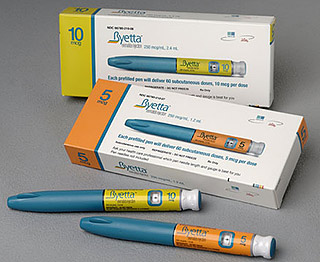
Victoza’s other potential advantage: it’s clearly differentiated from the only other drug in its class, Lilly/Amylin's Byetta, on both efficacy and conveniece. Takeda can’t say the same.
Good for Novo. Why not hold a brave face? If one thing’s clear, though, it’s that victory next month is not a foregone conclusion. But even if Victoza does stumble—and, as one of you kindly pointed out yesterday, pancreatitis is another possible hurdle, given Byetta’s story so far, although Novo doesn’t think it will be more than a labelling issue—Novo might not mind that much (not that it would ever say so.) As mentioned, any delay would likely stall Byetta LAR, too. Which leaves Novo playing in the field where it’s strongest: insulin.


image from flikr user Mel B. used under a creative commons license

Thursday, March 5, 2009

Novo Confident of Victoza Victory at FDA in May

The odds might appear to be stacked against it, but Novo Nordisk sounds remarkably confident that GLP-1 analog liraglutide (Victoza) will get approval from FDA by the end of May.

OK, so it needs to be confident: even if it is approved as expected, the once-daily drug, already about four years behind schedule, will have barely a year to make its mark before Lilly/Amylin’s once-weekly version of the incumbent GLP-1 analog Byetta hits the market in 2010.

But Novo’s up against a very diabetes-resistant FDA, with strong memories of the Avandia fallout, that has recently changed its guidelines in this disease area to require more safety data among patients at high risk of cardiovascular disease. And this, as Novo’s CMO Mads Krogsgaard Thomsen acknowledges, is “just the reverse of how we’ve recruited patients into diabetes trials in the past,” including into the liraglutide Phase III trials.

Traditionally, companies have sought to prove their drug’s safety and efficacy in relatively clean patient populations first. Given the cv signal picked up from Avandia well after that drug was approved, it’s clear why the agency has taken a more severe stand.

Among the 6000 or so patients in the liraglutide Phase III trials, very few suffered cv-related events. That’s good for those 6000, but it’s less good as far as providing sufficient statistical power to convince an edgy FDA to wave the drug through. Worse still, since Victoza’s early April advisory committee meeting is widely expected to provide the test case for the new guidance, FDA will be keen to set examples, not make exceptions.

Still, Novo’s got its defense all lined up--and its fingers crossed. For one thing, argues Thomsen, the guidance relates only to drugs that were not submitted by the time it was published, late last year. (Novo submitted liraglutide in May 2008.) There's some controversy over this, but the guidance, as Thomsen underlines, specifically appears to refer to studies in the planning stage and studies completed before submission of the NDA/BLA. (See pages 3 & 4.)

Plus, he adds, "we did not a receive any letter from FDA to say we would have to adhere to the guidelines with liraglutide, as we did for our [Phase II, not-yet-filed] once-weekly GLP-1 analog NN9535." His second point: when looking at risk factors like body weight, systolic blood pressure or biomarkers of cv events, “our data shows nothing concerning at all,” Thomsen told The IN VIVO Blog.

Sure, but FDA could always retort with: “Nor did Avandia’s. That’s the point of our guidance.” At this stage, Novo is hoping that its willingness to do a post-approval study looking specifically at cv outcomes will be enough to win the agency’s favor. “Even though the event numbers are small, we’ve done the [cv event] analyses that the agency asked for--the same ones it will now require going forward--and this convinces us at least why there’s a good case for not requiring a pre-approval study.” He goes on to say that liraglutide may even provide cv benefits.

Favorable trends aren’t enough, though. But whatever hoops Novo has to jump through, its competitors, BMS/AZ and Takeda, both with DPP-IV inhibitors currently under review and, more pertinently, Lilly/Amylin with Byetta LAR, will have to do the same. And whether Novo has to do its CV outcomes trial before or after approval, at least that data will help it make its case in the next—likely even tougher—regulatory challenge it faces with liraglutide: getting it approved for obesity.

image from flickr user samthsham used under a creative commons license.

Monday, March 2, 2009

While You Were Throwing Snowballs

At least on the East Coast, March has apparently lived up to its reputation and come in like a large cat. Here at IVB we're not so much concerned with the way it begins and ends, but instead would rather focus on the Madness in between.

Speaking of madness: while you were making snowmen ...
  • That Sebelius/HHS announcement that made so much news this weekend? Ramsey Baghdadi had the scoop for the IN VIVO Blog.
  • Art imitates life imitating comedy imitating sad state of the world: Pharma Giles at PharmaGossip.
  • Wyeth's Prevenar approved in Russia.
  • Roche scheme to enhance Pulmozyme compliance probably needed a little more thought, don'cha think? The company has now been censured in the UK for giving out Toys R Us gift certificates to children on the drug, reports the FT.
  • Actelion's application to expand Tracleer's use into PAH patients with less severe disease greeted with a complete response letter from FDA. FDA says Actelion's REMS first needs to be finalized and approved before it can finish its review of the sNDA.
  • Have higher regulatory hurdles affected investment in early-stage Type-2 diabetes companies? VCs weigh in at The Pink Sheet.
  • Offenses across the NFC East are breathing easier. Sadly, Brian Dawkins, no longer an Eagle, signs 5-year deal with Denver Broncos.

Tuesday, August 12, 2008

The Case for Byetta LAR (Part 2)

Amylin and Lilly have high hopes for Byetta LAR, a once-weekly formulation of the incretin mimetic exenatide. Analysts are (as they tend to be) of two minds, with opinion ranging from those who think LAR may fairly quickly become the dominant brand in the entire diabetes class to those who wonder whether it will even make it to market.

We will leave the debate over the commercial prospects to others. But we do think LAR looks to have a winning profile from the regulatory perspective.

That, to put it mildly, is counterintuitive. We just wrote that it is harder than ever to get new type 2 diabetes drugs on the market. And we’ve said previously that it is harder than ever to get line extensions to market. (Remember Cordaptive?) That sure doesn’t sound like a good prognosis for LAR.

But this may be a case where two wrongs do in fact make a right.

How so? Well, first, this is a circumstance where it definitely helps to be developing a line extension rather than a new molecule. Here is how Amylin CEO Dan Bradbury described the situation during Amylin’s second quarter conference call. “The FDA panel meeting really focused on cardiovascular risks associated with new chemical entities,” he said. “That is one of the major differences here.”

Indeed, the panel vote does imply that marketed antidiabetic products just got a little more valuable. In fact, one implication of the latest advisory committee vote is that the decision by FDA to leave Avandia on the market is an even bigger victory for GlaxoSmithKline than it appeared. (An advisory committee voted overwhelmingly last year to allow continued marketed of the drug. FDA’s internal Drug Safety Oversight Board agreed, but by a single vote. And ultimately the decision came down to CDER Director Janet Woodcock, who opted to allow continued marketing.)

Now, Avandia (like other marketed products) will be expected to generate outcomes evidence—but at least it can continue to generate revenues in the meantime. And the odds of another TZD coming into the market any time soon just when down. So maybe, just maybe, GSK will actually see sales of the franchise rebound a bit in the years remaining before patent expiry.

But Byetta LAR is not a case of asking FDA to approve a new agent to lower blood sugar, but rather a case of asking FDA to approve an improved version of an already marketed drug. And, in fact, of a drug that has an attractive cardiovascular risk profile, given Byetta’s effects on weight and lipid levels.

That alone, though, may not be good enough in the current regulatory climate. But here’s the kicker: FDA can use the LAR approval to ensure it gets the outcomes data to support its decision to approve Byetta in the first place. The agency, of course, already asks for that data routinely—but as everyone saw with Avandia, those post-marketing commitments are seldom sufficient to generate definitive conclusions about the kinds of questions the committee now wants answered.

FDA, though, has a new tool it can use going forward: mandatory post-marketing study requirements, complete with the ability to levy fines against manufacturers who fail to deliver data by an agreed upon time. As we’ve said before, this changes everything about Phase IV.

The new authority is much easier for the agency to apply prospectively, to newly approved drugs (or at least new applications for expanded uses, new labeling, etc.). The agency can (and in the case of type 2 diabetes, we bet it eventually will) go back and add post-marketing requirements to already marketed products, but that is a process that will take some time.

So, Lilly and Amylin have a two-fold case for Byetta LAR. It is an improvement over an already marketed drug (since, the companies say, it provides better glucose-lowering control and increased convenience)—and it also gives FDA the opportunity to finalize mandatory outcomes studies for exenatide sooner than it otherwise could.

And, as an added bonus, it fits perfectly with the companies’ commercial positioning of the product. Lilly and Amylin are already planning a large cardiovascular outcomes study based on extensive trials suggesting beneficial effects on surrogate endpoints. So it shouldn’t be hard for them to commit to FDA to do such a study as a condition for approval.

All of which means Byetta LAR may turn out to be the right product for the current regulatory climate.

Of course, if the commercial product isn’t the same as the one used in clinical trials, all bets are off…

Monday, August 11, 2008

The Case for Byetta LAR (Part 1)

Lilly and Amylin say they have one regulatory hurdle to cross before filing for the long-acting formulation of exenatide (Byetta LAR): demonstrating comparability between the clinical formulation of the drug and the proposed commercial supply manufactured by Amylin in Ohio.

Amylin CEO Dan Bradbury told investors during the company’s second quarter conference call July 21 that a recent meeting with the agency gives the company great confidence in its projection of an NDA filing sometime in the next year. The company has said all along that it expects to file by the end of the first half of 2009, Bradbury said; the meeting with FDA suggests that timeline may be conservative, since the agency may end up not requiring a full-fledged clinical crossover study.

At a time when investors are focused on the now clear, unequivocal emphasis on outcomes endpoints for new type 2 diabetes drugs, Amylin’s confidence in a near time filing date for Byetta LAR is big news.

This is a tough time for type 2 diabetes drug development. An FDA advisory committee essentially endorsed the Steve Nissen worldview: that blood sugar reduction is not an end in itself, and new drugs for use by diabetics need to provide sufficient evidence of outcomes benefits—especially cardiovascular outcomes—as a condition for approval.

Our colleagues at “The Pink Sheet” have extensive coverage of the meeting, and—more importantly—FDA’s takeaways from the meeting.

But in case you missed it, after a morning’s worth of warm-up, Steve Nissen—Cleveland Clinic cardiologist and shadow FDA commissioner—went up to the podium and called out the entire profession of endocrinology, telling the committee that they have made glucose reduction a goal in itself and lost sight of the bigger picture. Some committee members fumed visibly—but the panel spent the next day-and-a-half following the agenda laid out by Nissen.

The committee agreed with his premise—that it is no longer acceptable to approve drugs solely based on the ability to reduce HbA1c levels—and with his overall approach to assessing cardiovascular outcomes. They punted on some questions—like exactly how much outcomes research to expect, and under exactly what conditions the studies would be necessary prior to approval instead of as post-marketing commitments.

So what does all this mean, other than demonstrating once again the incredible influence Nissen has on drug development and use in this country at this moment in history?

First, it confirms that the bar is indeed higher for type 2 diabetes drugs, that—in effect—they will be governed by a quasi-superiority standard of the type that FDA has begun talking about for NSAIDs (and now antipsychotics).

That in itself should not be news: Remember Pargluva? But it is now clear that new agents for glucose reduction will be expected to demonstrate some compelling reason for approval—better HbA1c control, evidence of reduced toxicity, something—or else face the risk of being asked for definitive proof of outcomes prior to approval.

So there is plenty of reason to wonder whether Lilly and Amylin can in fact move forward with LAR as planned (or even faster than planned).

We think they can…and we’ll explain why tomorrow.

Thursday, August 2, 2007

Is Partial Agonism the Key to PPAR Success?

In case you haven't had your fill of TZD news this week, we bring you word that Dr Reddy's Labs and Rheoscience have dosed their first patient in what will be the first of several large Phase III studies of their partial PPAR gamma agonist balaglitazone.

Say what?

The timing of the trial's launch missed the Avandia circus by only a day and suggests there are companies out there willing to put in the time and money and Herculean effort to make their case for potentially differentiated products in a problematic class. Some senior industry executives think the odds are stacked against success.

Among those skeptics is Wyeth R&D chief Bob Ruffolo, who when interviewed by the IN VIVO Blog only six weeks or so ago, asked (rhetorically): "Who is going to bring a new, improved version of Avandia to market" given the regulatory mountain the FDA will surely make such a company climb?

And it's a fair question, particularly in light of the past few months' events. Let's review.
  • GSK's Avandia, subject of everyone's favorite meta-analysis, though allowed to remain on the market for now, will get slapped with some stern patient- and doctor-scaring warnings. Takeda's Actos has avoided the whirlpool so far.

  • The PPAR class hasn't exactly had smooth safety sailing prior to Avandia's snafu. Warner-Lambert's Rezulin kicked off the parade back in 2000 and so-called next-generation dual gamma/alpha PPAR agonists like AZ's Galida and Merck's MK-767 and Merck/BMS' Pargluva eventually followed.
  • Clinicians and patients may be moving beyond the PPARs in any case. The RPM Report has reviewed the winners/losers: Actos may have seen a bump in the wake of the initial Avandia news, but that hasn't lasted. Merck's first-in-class DPP4 inhibitor Januvia is enjoying wild success in its first year on the market and observers are salivating over potential newcomers like Amylin's once-weekly Byetta and Novo Nordisk's liraglutide.

Nevertheless, Rheoscience presses on. If Actos is now the TZD safety standard bearer, it makes sense that to get to market now companies will have to prove their drugs as safe or safer than Takeda's (in fact, European drug regulators require such an active comparator to prove non-inferiority). Rheoscience is aiming to do just that. The first balaglitazone Phase III will be a European "six-month, double-blinded, randomized, placebo-controlled multicenter trial in which type 2 diabetes patients will be given daily doses of either 10 or 20 mg of balaglitazone versus the active comparator Actos (45mg/day) as an add on to stable insulin treatment," according to Rheoscience.

Our interest piqued, we got in touch with Rheoscience CEO Philip Just Larsen, MD, PhD. (For background on Rheoscience, check out our 2004 profile of the company.) Rheoscience's September 2005 deal with Dr. Reddy's got the Danish biopharma company European and Chinese rights to balaglitazone in exchange for taking responsibility for execution and costs associated with the drug's US/EU Phase III program and US regulatory submission (Rheoscience will also receive an undisclosed milestone payment if an NDA is approved and undisclosed royalties on US sales). Novo Nordisk once held rights to the drug, but returned them to Dr Reddy's in 2004, back when dual PPARs were still expected to dominate the class, says Larsen.

Larsen stresses the benefits of balaglitazone's partial gamma agonist properties. "It doesn't take full agonism for full glycemic control," he argues, pointing out that Phase II studies of the drug as well as preclinical models suggest that 20mg of balaglitazone is comparable to 45mg of Actos in that regard.

What's more, he says, balaglitazone shouldn't raise the same safety concerns as other TZDs, since in vitro models and preclinical trials suggest it causes less fluid retention than Avandia and Actos and is less adipogenic than those drugs. The second Phase III trial for the drug is an international long-ranging study to generate a safety database; again that trial will use Actos as a comparator, but Larsen says he doesn't expect either drug to generate the same cardiac ischemia safety signals that have plagued Avandia.

"It's worth emphasizing that it's not the class as such that is under suspicion for inducing cardiac ischemia," he says. "Actos is not associated with cardiac ischemia," a notion backed by FDA's David Graham during Avandia's recent panel meeting, he says.

Nevertheless the series of trials required to get balaglitazone onto the European and US markets will be very costly (Larsen declines to say exactly how costly). Patients and clinicians may be wary of TZDs and hamper trial enrollment (a suggestion Larsen disputes, particularly in terms of European patient accrual). The future of diabetes treatment may indeed by combination therapy, but whether or not TZDs are a mainstay of those combos remains to be seen as newer drugs like the GLP-1s make progress. The regulatory environment--for all drugs, it sometimes seems--is increasingly tricky. Larsen remains optimistic.

"I'm not worried about the regulatory environment. The advisory panel was in favor of drugs in this class, they're a necessary tool in the toolbox," he says. "Treating diabetics is a challenge and by limiting the options you put yourself in a difficult position, and these [TZD] products are quite efficacious."

As for the class' past failures, he points out that "the entire concept of pursuing the dual agonists was a blind alley, and it took those Phase III trials to show that is the case. That is how the selective PPAR agonists like balaglitazone were revitalized," and now shown that pursuing partial agonism could control the side effects related to full agonists like Avandia.

Rheoscience and Dr. Reddy's have competition. A second partial-PPAR gamma agonist in late stage trials belongs to Metabolex and Johnson & Johnson (we wrote about their innovative deal last summer). But don't expect any winners for quite some time. Balaglitazone's NDA won't be filed before late 2009 at the earliest.

Sunday, June 24, 2007

While You Were at ADA

Here are a few of the stories that IN VIVO Blog picked up on over the weekend ...
  • Not technically a weekend event, but late on Friday Congress introduced legislation that would change the tax treatment of carried interest from a capital gain to regular income, effectively jacking up the tax rate on VCs, hedge funds and private equity shops from 15% to 35%. Spirited discussion continues over at PE Hub, but comments encouraged here too. Will this truly hurt the pace of innovation in the US, as has been and will be argued? Or are undertaxed investors only looking out for #1? Both?

  • The American Diabetes Association's annual meeting kicked off in Chicago. Among the companies presenting data was Merck. Reuters reports on some new Januvia data that suggests the drug added to standard therapies (study 1: metformin, study 2: metformin plus sulfonylureas) improves blood sugar better than those therapies alone. The incidence of hypoglycaemia, however, was up in the Januvia groups in each study when compared to the control.

  • In other ADA news, Lilly and Amylin presented solid data from a long-term study of Byetta, including progressive weight loss over a three and a half year period. Novo Nordisk's liraglutide is no slouch either. See this June IN VIVO story for the low down on Novo's diabetes prowess.

Wednesday, June 6, 2007

It must be two-for-one week on private biotechs

It was always a question of when, not if. Amgen needed to do something to provide for its post-EPO future; now the action has started. Today's acquisition of private Alantos, for $300 million in cash, takes this week's shopping bill for Amgen up to $720 million. Just a couple of days ago it snapped up Ilypsa for $420 million.

Ilypsa fits nicely with Amgen’s existing nephrology franchise: the company’s focused on renal disorders and has a Phase II candidate to treat high blood phosphate in dialysis patients. But Alantos takes Amgen into new, uncharted territory: diabetes.

Now granted, diabetes is a huge and expanding market—that’s why, as Amgen’s executives made clear to IN VIVO last month, it’s a development priority (along with cardiovascular disease). It’s the only primary care area where sales forces are increasing, not shrinking; the number of US reps has doubled to 10,000 in the last five years.

But it’s also gotten highly competitive, with Big Pharma including Merck & Co., Novartis and Roche all piling in. Amgen may have taken faith from the spectacular performance of Merck’s DPP-IV inhibitor Januvia, in the same class as Alantos lead Phase IIa program. But will there be room for many more in the same class?

Not according to Novo Nordisk, who pulled out of the oral anti-diabetics space earlier this year. They might just have sour grapes, since their own DPP-IVs failed several years ago, and the variety of DPP-IVs out there all bind the target differently, with differing degrees of safety and efficacy. But there’s another shadow over the class: GLP-1 analogs (glucagon-like peptide-1 analogs).

For a variety of reasons that you can read about in the forthcoming issue of IN VIVO, many experts believe that GLP-1s, not DPP-IVs, are the place to be in diabetes. Sure, DPP-IVs are oral, GLP-1s are injected. But, getting back to Amgen, it’s not as if they don’t know about proteins.

All that said: good for Amgen. At least they’re doing something, and who knows, maybe Alantos’ DPP-IV will trump Merck's in efficacy or safety (although if so, Amgen will want to take back ex-US rights, which were licensed last October to Servier). Meanwhile Alantos’ investors have done okay—the company has raised a little under $60 million since its foundation (as Therascope AG) in Germany in 1999. --Melanie Senior & Chris Morrison

Friday, May 25, 2007

A Boon for Byetta?

As doctors, patients and regulators rush to make sense of the recent NEJM study showing an increased risk of heart attack among patients taking GSK's Avandia, it looks like good news for Lilly's Byetta.

The GLP-1 analog--or 'smart drug', as Lilly execs like to call it, since it stimulates insulin secretion in a glucose-dependent way, reducing the risk of hypoglycemia--has already done pretty well since its launch in June 2005. It suffered a brief blip in sales when Merck's DPP-IV inhibitor Januvia arrived (since Januvia, although less effective, comes in pill form and Byetta is a twice-daily injection) but has since recovered. Sales will be about $700 million this year.

And things can only get better. "Both Januvia and Byetta will benefit from Avandia's problems, and as physicians see that Januvia isn't that great, they'll move to Byetta," David Kliff, publisher of Diabetic Investor, told the IN VIVO Blog.

Januvia seems safe--so far--but doesn't actually work that well, as we explained in a previous issue of IN VIVO. Byetta, on the other hand, not only is extremely effective at controlling blood sugar (it prevents sugar lows plus, because of its effect on glucagon, sugar highs) but also helps diabetic patients lose weight.

And that, frankly, is just perfect, since many diabetics are overweight, and since insulins tend to exacerbate that problem. So rather than being stuck on insulin, getting fatter and with poorly controlled blood sugar levels (only about a third of insulin users actually control their blood sugar effectively), patients "start a cycle of success," enthuses Lilly's global brand development leader for Byetta, David Vondle. "They have more energy, start feeling better, so they take a walk, and that helps with weight loss...and they're just more optimistic," he says.

Lilly's GLP-1 team probably feels pretty happy, too (unlike their cousins in the insulin department, who blew it). Not only has first-to-market Byetta brought a huge improvement to patients' lives, but there's an even bigger paradigm-shift on the way: a once weekly Byetta. "Every doctor is salivating for Byetta LAR," says Kliff.

They'll have to salivate until 2010, but it may be worth the wait: patients will be able to take just one weekly injection, rather than twice daily. That's 13 fewer injections per week.

That's a selling point if ever there was one. And, as with Avandia, where there's a winner, there's a loser. In the GLP-1 space, it might just be Novo Nordisk's human GLP-1 analog, liraglutide. It's due out a year or so before Byetta LAR, but Novo's not always the timeliest, and liraglutide is a once-daily. Read more in the next issue of IN VIVO.