
Showing posts with label Steve Nissen. Show all posts
Showing posts with label Steve Nissen. Show all posts
Tuesday, February 23, 2010


Monday, August 11, 2008
The Case for Byetta LAR (Part 1)
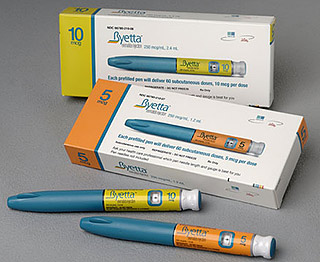 Lilly and Amylin say they have one regulatory hurdle to cross before filing for the long-acting formulation of exenatide (Byetta LAR): demonstrating comparability between the clinical formulation of the drug and the proposed commercial supply manufactured by Amylin in Ohio.
Amylin CEO Dan Bradbury told investors during the company’s second quarter conference call July 21 that a recent meeting with the agency gives the company great confidence in its projection of an NDA filing sometime in the next year. The company has said all along that it expects to file by the end of the first half of 2009, Bradbury said; the meeting with FDA suggests that timeline may be conservative, since the agency may end up not requiring a full-fledged clinical crossover study.
At a time when investors are focused on the now clear, unequivocal emphasis on outcomes endpoints for new type 2 diabetes drugs, Amylin’s confidence in a near time filing date for Byetta LAR is big news.
This is a tough time for type 2 diabetes drug development. An FDA advisory committee essentially endorsed the Steve Nissen worldview: that blood sugar reduction is not an end in itself, and new drugs for use by diabetics need to provide sufficient evidence of outcomes benefits—especially cardiovascular outcomes—as a condition for approval.
Our colleagues at “The Pink Sheet” have extensive coverage of the meeting, and—more importantly—FDA’s takeaways from the meeting.
But in case you missed it, after a morning’s worth of warm-up, Steve Nissen—Cleveland Clinic cardiologist and shadow FDA commissioner—went up to the podium and called out the entire profession of endocrinology, telling the committee that they have made glucose reduction a goal in itself and lost sight of the bigger picture. Some committee members fumed visibly—but the panel spent the next day-and-a-half following the agenda laid out by Nissen.
The committee agreed with his premise—that it is no longer acceptable to approve drugs solely based on the ability to reduce HbA1c levels—and with his overall approach to assessing cardiovascular outcomes. They punted on some questions—like exactly how much outcomes research to expect, and under exactly what conditions the studies would be necessary prior to approval instead of as post-marketing commitments.
So what does all this mean, other than demonstrating once again the incredible influence Nissen has on drug development and use in this country at this moment in history?
First, it confirms that the bar is indeed higher for type 2 diabetes drugs, that—in effect—they will be governed by a quasi-superiority standard of the type that FDA has begun talking about for NSAIDs (and now antipsychotics).
That in itself should not be news: Remember Pargluva? But it is now clear that new agents for glucose reduction will be expected to demonstrate some compelling reason for approval—better HbA1c control, evidence of reduced toxicity, something—or else face the risk of being asked for definitive proof of outcomes prior to approval.
So there is plenty of reason to wonder whether Lilly and Amylin can in fact move forward with LAR as planned (or even faster than planned).
We think they can…and we’ll explain why tomorrow.
Wednesday, July 23, 2008
Next Steps for PhRMA and Marketing (Part 3): Let the Sunshine In
 Concluding our series of proposals for pharmaceutical marketing to reclaim the high ground. We've already suggested re-defining the mission and combining the Pharmaceutical Research & Manufacturers of America's various codes of conduct.
Today, step three: Let the Sunshine In
“Transparency” is now everybody’s favorite buzzword in Big Pharma. Merck CEO Richard Clark urged his colleagues to embrace the call to "create transparency" during his inaugural address as chairman of PhRMA.
Indeed, the immediate impetus for PhRMA’s effort to update the marketing code came when Congress got serious about pushing “sunshine” legislation. (And the Code is already a success, since that initiative did not make it into law this year.)
The problem with transparency: by definition, you can’t see it. Obstruction you can see. Transparency is invisible.
Since the calls for transparency are motivated fundamentally by mistrust of industry, how will the public (or at least its elected representatives) ever be satisfied that industry is in fact being transparent? Put another way, if industry chooses to hold anything back—for competitive reasons or otherwise—why wouldn’t the assumption continue to be that some ugly truth is being hidden away?
Our suggestion: invite the public in to those conversations. Every pharma company should appoint a transparency committee, a group of independent outsiders--preferably well-known critics. The transparency committee (though we prefer the name "sunshine band") would have carte blanche to review anything and everything related to the company's procedures on information disclosure. They would be empowered to make recommendations that the company would be obliged to respond to. (Not necessarily implement--but at least acknowledge and explain a decision not to implement.)
The transparency committee should report directly to the board—or even better, to a central transparency committee convened by PhRMA. We even have the perfect chairman: Cleveland Clinic Cardiologist Steve Nissen. (He may have bigger plans for his career that rule him out, but still.)
Nissen is a particularly articulate critic of industry on issues like publication bias and clinical trial result reporting. But he is also a clinical investigator and an experienced author of academic research, so he understands the importance of protecting information as well.
That whole idea may sound crazy, but give us a second, we're just getting warmed up.
Industry could go yet one step further than letting its critics shape disclosure policies: it could ask them to review and approve its marketing plans in the first place. Now we know this sounds crazy. Pharma companies went ballistic over a provision in an early draft of the FDA Amendments Act that would have explicitly authorized FDA to review a company’s marketing plan in the context of assessing a proposed Risk Evaluation & Mitigation Strategy.
That provision came out--but the spirit lives on. In fact, we would argue that a suitably motivated FDA can and will demand access to marketing plans for drugs under the REMS authority. And even if FDA doesn't push that way on its own, the fact that Congress thought about it once means it is likely to come up again later.
More to the point: industry says marketing is about delivering valuable scientific information to doctors and patients. It is about education. So why not ask those being educated to review and respond to the curriculum? Who knows, they might even get excited about the new medicine...
Enough opining from us. What do you think?
Nissen is a particularly articulate critic of industry on issues like publication bias and clinical trial result reporting. But he is also a clinical investigator and an experienced author of academic research, so he understands the importance of protecting information as well.
That whole idea may sound crazy, but give us a second, we're just getting warmed up.
Industry could go yet one step further than letting its critics shape disclosure policies: it could ask them to review and approve its marketing plans in the first place. Now we know this sounds crazy. Pharma companies went ballistic over a provision in an early draft of the FDA Amendments Act that would have explicitly authorized FDA to review a company’s marketing plan in the context of assessing a proposed Risk Evaluation & Mitigation Strategy.
That provision came out--but the spirit lives on. In fact, we would argue that a suitably motivated FDA can and will demand access to marketing plans for drugs under the REMS authority. And even if FDA doesn't push that way on its own, the fact that Congress thought about it once means it is likely to come up again later.
More to the point: industry says marketing is about delivering valuable scientific information to doctors and patients. It is about education. So why not ask those being educated to review and respond to the curriculum? Who knows, they might even get excited about the new medicine...
Enough opining from us. What do you think?
Monday, July 30, 2007
The Nail in the Coffin on Avandia
 It doesn't matter what the committee votes now.
The final blow to GlaxoSmithKline's diabetes drug Avandia was not delivered by FDA whistleblower and director for science and medicine in the office of surveillance and epidemiology David Graham, although he gave the most persuasive presentation during the morning session of today's advisory committee meeting on the troubled product. It was his boss, drug safety director Gerald Dal Pan.
Graham gave the last presentation before lunch and predictably came to the conclusion that Avandia should be pulled from the market. He went through a detailed, half-hour talk explaining why he came to his conclusion, using a combination of results from long-term, placebo controlled studies, and meta-analyses to show rosiglitazone's benefits did not outweigh its cardiovascular risks.
"There is no evidence, none whatsoever, to support the benefits of rosiglitazone with these outcomes," Graham said refering to a host of cardiovascular adverse events including heart attack. He paralleled the Avandia situation to Warner-Lambert's Rezulin, saying it had cardiovascular risks other drugs (read Takeda's Actos) in the class did not have. Rezulin was pulled for showing fatal liver toxicities other drugs in the class did not have (read our earlier post).
Everyone expected that from Graham. But it was Dal Pan's endorsement of Graham's findings that effectively killed this drug, even if it does stay on the market with a black box warning. If Glaxo's legal team wasn't already in crisis management mode, they certainly will be now.
Dal Pan was noticeably reserved about the meta-analysis finding of a 43% increased risk of heart attack linked to Avandia during an early July Congressional House hearing. He was not ready at that point to make any determination on Avandia. Now, he has reached his conclusion: it should be pulled. The benefit/risk profile of Avandia "is not favorable" Dal Pan concluded.
Best case scenario for Glaxo, Graham says, is that Avandia was responsible for 40,000 excessive cardiovascular events in 6.5 years since 1999. Graham puts the real number at 80,000 excess cases. A real nightmare, if true.
Dal Pan gives credibility to Graham's findings that did not previously exist. The only reason the Office of Drug Safety did not make a formal withdrawal recommendation is that the whole drug safety team had not had a chance to review the analysis as of yet, according to Graham.
There is clearly a line in the sand between the Office of New Drugs and the Office of Surveillance and Epidemiology (drug safety) within FDA's Center for Drug Evaluation & Research. OND wants to keep it on the market, OSE wants it off. CDER office of drug evaluation II director Robert Meyer argued eloquently against Graham and Dal Pan's conclusions, adding that he himself had not decided on the appropriate "regulatory action."
But that doesn't mean much anymore. Whether or not it stays on the market, GSK's Avandia is dead.
Friday, July 27, 2007
Avandia and Rezulin: Parallels that Should Make GSK Nervous
History doesn’t repeat itself but it does rhyme. That old Mark Twain saying must be making GlaxoSmithKline sweat as Avandia is starting to look more and more like another Rezulin. By our reading of the tea leaves, Avandia is in much more peril than anyone seems to realize.
GSK is hunkering down for continuing assaults on its number two drug, battered initially by Cleveland Clinic’s Steve Nissen whose meta-analysis showed a 43% increase in heart attack risk for Avandia patients compared to control.
During the company's second quarter conference call, CEO JP Garnier clearly was using the "If you sound like a winner, you are a winner" strategy when it came to discussing Avandia with investors, analysts and media.
"We are still encouraged [about Avandia] because we have seen...a lot of evidence recently," Garnier said of the data GSK has submitted to the agency in advance of a Monday advisory committee fact-gathering meeting. "The evidence is supportive of Avandia's risk/benefit ratio, and of its effect on cardiovascular safety."
GSK is hyping a 400,000-patient epidemiology study of patients on Avandia and Takeda's Actos among other treatments that apparently bodes well for the diabetes drugs.
Glaxo has said that they simply have been unsuccesful in boiling down their message on Avandia to a "7-second soundbyte" which is the reason for the more than 45% decline in new Avandia scripts. " In the US, the media has ... had more of an impact on physician and patient impressions than the data itself," GSK's pharma operations chief David Stout said on the call.
Clearly, the message from GSK is: We stand behind Avandia. Unfortunately for the company, there are some discouraging parallels between their diabetes drug and Warner-Lambert's Rezulin.
Warner-Lambert pioneered the glitazone class, but Rezulin caused liver toxicity that ultimately led to its withdrawal. A recap of the regulatory history suggests some uncomfortable parallels with Avandia and the concerns about cardiovascular safety.
Two months after it got to market in 1997, FDA slapped Rezulin with a stricter warning on its packaging (thanks to 35 post-marketing reports of liver injury). At that point, 500,000 patients were already on the drug. Several "Dear Doctor" letters later, FDA's Endocrine and Metabolic Drugs Advisory Committee reviewed the liver tox issues, and recommended keeping Rezulin on the market, but only for patients not well-controlled on other diabetes drugs. One year later, the drug was taken off the market when reports kept coming in.
For Avandia, the toxicity is different--cardiovascular rather than liver--but the slow motion, repeated regulatory reactions are similar.
Avandia labeling was rewritten to strengthen cardiovascular safety warnings in 2001, and the company issued a "Dear Doctor" letter on the topic at that time. The concerns were raised more directly in the context of the review of Avandia for an indication for use with insulin; that use was ultimately approved in 2003. The Nissen paper now has put the regulatory machinery into fast forward, and an advisory committee will discuss Avandia's fate on Monday.
All of that is uncomfortable enough, but there is another parallel to the end of Rezulin emerging at the worst time for GSK: a Senate Committee is raising concerns that FDA reassigned a medical officer who wanted to put stronger warnings on Avandia.
If that sounds familiar, it should. In early March 2000, FDA senior medical officer Robert Misbin wrote a letter to Rep. Henry Waxman (D-Calif.) expressing frustration over FDA's handling of Misbin's attempts during the previous two months to convince the agency's Center for Drug Evaluation & Research that Rezulin had to be withdrawn from the market. Misbin asserted that FDA officials had stopped him from releasing information related to deaths of Rezulin patients.
One other thing: Misbin was the primary reviewer on Avandia and was taken off of the review several years ago. (Apparently, he's not the whistleblower this time around -- for more speculation on who the whistleblower might be, see the next post.)
All in all, Monday's advisory committee meeting doesn’t look good for Avandia. Even if the medical officers keep quiet, FDA will not be presenting a united front to the committee. That's because the agency is once again going to let its most prominent whistleblower, director for science and medicine in OSE David Graham, make a formal presentation. Graham most recently helped ensure that Merck's Arcoxia died a painful public death before an FDA advisory committee. FDA has apparently concluded that they have to let Graham speak at these meetings rather than wait for him to go to Congress to make his presentations. (Here is our coverage of the Arcoxia debacle.)
On Avandia, Graham has already made his position clear in FDA briefing documents. He argues that the current postmarketing studies (in particular the key RECORD study) can't, statistically, demonstrate a heart attack risk related to Avandia: they're underpowered. In other words, the current scientific evidence is all FDA is going to get to make their decision on the future of GSK's drug. Anyone want to venture a guess at where Graham will stand on Avandia?
And its not like FDA won't let the discussion go into whether the drug needs to be pulled. Quite the opposite. Here is one question posed to the committee: "Does the overall risk-benefit profile of Avandia support its continued marketing in the US (VOTE requested)? If yes, please comment on what FDA should do to maximize the risk-benefit considerations (e.g., limit to certain patients, incorporate a boxed warning….)"
That question means FDA is thinking awfully hard about whether this drug should stay on the market. You could argue that they added the question for political cover in order to leave it on the market, but I'm not buying it. I think they really want to know the experts' opinion.
And what will that opinion be? Nissen himself has said Avandia should remain on pharmacy shelves. NIH's Malozowski told us that he didn’t think FDA would pull it. “They will probably add a warning for a subpopulation of patients and a contraindication for its use with insulin."
I also asked Tom Garvey, a former FDA reviewer who runs his own drug development consulting business, what he thought. He concurs with Malozowski. Sort of.
Rezulin could be pulled off the market with less risk, he argued, because there were two other marketed drugs without Rezulin’s liabilities. Moreover, "the absolute risk found by Nissen is small (if, indeed, it exists) and the benefit conferred by Avandia is not inconsequential, especially in certain types of type II diabetics.”
But then he added, surprisingly: “All of this having been said, I too get the sense that the drug is probably doomed."
In short, as with Rezulin, an FDA advisory committee could recommend keeping Avandia on the market, in a limited way—while, in parallel, the political and historical momentum builds to yank it off. On the scientific front, the data isn’t clear. Nissen's meta-analysis has come under intense fire, but his results were confirmed by FDA's own meta-analysis, and they had access to a much larger data set. Meanwhile, GSK's RECORD study has been inconclusive on the heart attack risk question.
But the political front will evolve in its own way. And if history really is rhyming, if not precisely repeating itself, FDA will have a hard time keeping Avandia on the market.
GSK is hunkering down for continuing assaults on its number two drug, battered initially by Cleveland Clinic’s Steve Nissen whose meta-analysis showed a 43% increase in heart attack risk for Avandia patients compared to control.
During the company's second quarter conference call, CEO JP Garnier clearly was using the "If you sound like a winner, you are a winner" strategy when it came to discussing Avandia with investors, analysts and media.
"We are still encouraged [about Avandia] because we have seen...a lot of evidence recently," Garnier said of the data GSK has submitted to the agency in advance of a Monday advisory committee fact-gathering meeting. "The evidence is supportive of Avandia's risk/benefit ratio, and of its effect on cardiovascular safety."
GSK is hyping a 400,000-patient epidemiology study of patients on Avandia and Takeda's Actos among other treatments that apparently bodes well for the diabetes drugs.
Glaxo has said that they simply have been unsuccesful in boiling down their message on Avandia to a "7-second soundbyte" which is the reason for the more than 45% decline in new Avandia scripts. " In the US, the media has ... had more of an impact on physician and patient impressions than the data itself," GSK's pharma operations chief David Stout said on the call.
Clearly, the message from GSK is: We stand behind Avandia. Unfortunately for the company, there are some discouraging parallels between their diabetes drug and Warner-Lambert's Rezulin.
Warner-Lambert pioneered the glitazone class, but Rezulin caused liver toxicity that ultimately led to its withdrawal. A recap of the regulatory history suggests some uncomfortable parallels with Avandia and the concerns about cardiovascular safety.
Two months after it got to market in 1997, FDA slapped Rezulin with a stricter warning on its packaging (thanks to 35 post-marketing reports of liver injury). At that point, 500,000 patients were already on the drug. Several "Dear Doctor" letters later, FDA's Endocrine and Metabolic Drugs Advisory Committee reviewed the liver tox issues, and recommended keeping Rezulin on the market, but only for patients not well-controlled on other diabetes drugs. One year later, the drug was taken off the market when reports kept coming in.
For Avandia, the toxicity is different--cardiovascular rather than liver--but the slow motion, repeated regulatory reactions are similar.
Avandia labeling was rewritten to strengthen cardiovascular safety warnings in 2001, and the company issued a "Dear Doctor" letter on the topic at that time. The concerns were raised more directly in the context of the review of Avandia for an indication for use with insulin; that use was ultimately approved in 2003. The Nissen paper now has put the regulatory machinery into fast forward, and an advisory committee will discuss Avandia's fate on Monday.
All of that is uncomfortable enough, but there is another parallel to the end of Rezulin emerging at the worst time for GSK: a Senate Committee is raising concerns that FDA reassigned a medical officer who wanted to put stronger warnings on Avandia.
If that sounds familiar, it should. In early March 2000, FDA senior medical officer Robert Misbin wrote a letter to Rep. Henry Waxman (D-Calif.) expressing frustration over FDA's handling of Misbin's attempts during the previous two months to convince the agency's Center for Drug Evaluation & Research that Rezulin had to be withdrawn from the market. Misbin asserted that FDA officials had stopped him from releasing information related to deaths of Rezulin patients.
One other thing: Misbin was the primary reviewer on Avandia and was taken off of the review several years ago. (Apparently, he's not the whistleblower this time around -- for more speculation on who the whistleblower might be, see the next post.)
All in all, Monday's advisory committee meeting doesn’t look good for Avandia. Even if the medical officers keep quiet, FDA will not be presenting a united front to the committee. That's because the agency is once again going to let its most prominent whistleblower, director for science and medicine in OSE David Graham, make a formal presentation. Graham most recently helped ensure that Merck's Arcoxia died a painful public death before an FDA advisory committee. FDA has apparently concluded that they have to let Graham speak at these meetings rather than wait for him to go to Congress to make his presentations. (Here is our coverage of the Arcoxia debacle.)
On Avandia, Graham has already made his position clear in FDA briefing documents. He argues that the current postmarketing studies (in particular the key RECORD study) can't, statistically, demonstrate a heart attack risk related to Avandia: they're underpowered. In other words, the current scientific evidence is all FDA is going to get to make their decision on the future of GSK's drug. Anyone want to venture a guess at where Graham will stand on Avandia?
And its not like FDA won't let the discussion go into whether the drug needs to be pulled. Quite the opposite. Here is one question posed to the committee: "Does the overall risk-benefit profile of Avandia support its continued marketing in the US (VOTE requested)? If yes, please comment on what FDA should do to maximize the risk-benefit considerations (e.g., limit to certain patients, incorporate a boxed warning….)"
That question means FDA is thinking awfully hard about whether this drug should stay on the market. You could argue that they added the question for political cover in order to leave it on the market, but I'm not buying it. I think they really want to know the experts' opinion.
And what will that opinion be? Nissen himself has said Avandia should remain on pharmacy shelves. NIH's Malozowski told us that he didn’t think FDA would pull it. “They will probably add a warning for a subpopulation of patients and a contraindication for its use with insulin."
I also asked Tom Garvey, a former FDA reviewer who runs his own drug development consulting business, what he thought. He concurs with Malozowski. Sort of.
Rezulin could be pulled off the market with less risk, he argued, because there were two other marketed drugs without Rezulin’s liabilities. Moreover, "the absolute risk found by Nissen is small (if, indeed, it exists) and the benefit conferred by Avandia is not inconsequential, especially in certain types of type II diabetics.”
But then he added, surprisingly: “All of this having been said, I too get the sense that the drug is probably doomed."
In short, as with Rezulin, an FDA advisory committee could recommend keeping Avandia on the market, in a limited way—while, in parallel, the political and historical momentum builds to yank it off. On the scientific front, the data isn’t clear. Nissen's meta-analysis has come under intense fire, but his results were confirmed by FDA's own meta-analysis, and they had access to a much larger data set. Meanwhile, GSK's RECORD study has been inconclusive on the heart attack risk question.
But the political front will evolve in its own way. And if history really is rhyming, if not precisely repeating itself, FDA will have a hard time keeping Avandia on the market.
Tuesday, July 24, 2007
Dissin' Steve Nissen?

The New York Times ran an interesting profile of the Cleveland Clinic's Steve Nissen on Sunday in light of his "controversial" meta-analysis finding over a 40% increased risk of heart attack for diabetes patients on GlaxoSmithKline's drug Avandia.
I interviewed Dr. Nissen a few months ago. Check out our July issue of The RPM Report called "Inside the Mind of a Serial Drug Killer" to find out what makes him go, what would make him stop and what he thinks is driving some members of Congress to criticize his efforts. Note, the Times may have higher circulation than The RPM Report , but we had the better headline.
But don't take our word for it. Here are a couple of excerpts:
The RPM Report: What would make you stop doing this type of work in the area of drug safety?
Nissen: It is all of our jobs, not just the FDA’s job to do this. Those of us in the physician community owe it to our patients to give equal balance and weight to positive and negative findings about drugs, and so should the FDA. Even if the FDA were doing an outstanding job, it’s still the responsibility of independent scientists to do these sorts of things, so it really isn’t about the FDA.
The RPM Report: So creating two drug centers—one for premarket review and one for postmarket surveillance—would not stop you from doing this kind of research. You feel this is a moral obligation.
Nissen: It is a moral and ethical obligation; it’s just about good science, it’s a scientific obligation. Science is about pursuing the truth and wherever that leads you. If we had very, very good regulatory agencies looking after this, there may be fewer opportunities to turn these things up.
How did we find out about fen-phen? There was an independent group of physicians that began seeing fen-phen patients with valve abnormalities. They said, “Oh my God, this is a potentially serious problem, let’s publish it,” and they did a great thing, they probably saved a lot of lives; they’re heroes.
The RPM Report: Why is there such a visceral reaction to you and the research you are doing? FDA’s meta-analysis of Avandia studies showed similar findings as your meta-analysis.
Nissen: Right. Part of the problem is this is not about me. One of the issues is sometimes when you don’t like the message; it’s easier to attack the messenger. It’s to be expected, but we’ve got to keep everyone focused on the science. I was very restrained in that [Avandia] hearing, I didn’t attack back. I simply said: this is what we did, this why we did it, this is why it’s important, and I’m going to stay on that message because it’s the right thing to do.
The RPM Report: Rep. Darrell Issa (R-Calif.) seemed particularly unnerved by your analysis and the process you took to get it published?
Nissen: He was wrong about the statistics, you cannot calculate an effect size if there are no events [studies with no heart attack events were excluded from Nissen’s meta-analysis]. He had been briefed by people giving him campaign contributions and that happens to be GSK. I looked it up. The three people on the attack at the hearing were very heavy recipients of GSK campaign money.
For the rest of the interview, subscribe to The RPM Report. Also, Nissen will be speaking at our annual FDA/CMS Summit in December in Washington, D.C. in case you want to hear him in person.Speaking of Avandia, there is a July 30 fact-gathering meeting between FDA and Glaxo (Takeda, which markets Actos, is an invited guest) regarding the cardiovascular profile of the diabetes drug. While something conclusive could come out of that meeting, it's highly doubtful. So we'll just have to wait and see whether Nissen and his meta-analysis are vindicated for finding risks that hadn't been previously uncovered or his findings were rushed, sloppy and wrong. Stay tuned. It could be a while.
Monday, May 21, 2007
Nissen goes meta on GSK; markets take back $13 billion
 Cleveland Clinic cardiologist and Big Pharma nemesis Steve Nissen has struck again, this time calling out GSK's Avandia in a New England Journal of Medicine analysis of the drug's cardiovascular side effects across a variety of clinical trials. Nissen's meta analysis concludes that Avandia patients are 43% more likely to have a heart attack than patients given a placebo or another drug.
GSK's share price stumbled more than 8% as the markets digested the news, wiping a whopping $13 billion off the company's market cap. The Big Pharma for its part predictably "strongly disagreed" with Nissen and co-author Kathy Wolski, pointing out the intrinsic shortcomings of the kind of meta-analysis done by Nissen and Wolski and holding up data from its ADOPT and DREAM studies, which suggested Avandia risk was comparable to that of commonly used diabetes meds metformin and sulfonylurea and placebo, respectively.
The authors acknowledged the limitations of meta-analysis but suggested GSK needed to make public more data from its Avandia program for further analysis to more accurately determine the drug's cardivascular risks.
"The manufacturer's public disclosure of summary results for rosiglitazone clinical trials is not sufficient to enable a robust assessment of cardiovascular risks," they contend. "Until better precision of the estimates of the risks of this treatment on cardiovascular events can be delineated in patients with diabetes, patients and providers should give careful consideration to the risks and benefits of their overall treatment plans."
The WSJ's Health Blog put together a nice list of Nissen's previous pharma takedowns, which includes Merck's Vioxx and Bristol/Merck's Pargluva. Nissen's prominence as a critic of industry and FDA is something our RPM Report colleagues have examined in depth several times (see their May piece for an FDA reaction to his criticism and this June 2006 look at the emergence of academics like Nissen as a shadow-FDA force to be reckoned with).
FDA's medical policy head Bob Temple told the RPM Report that meta-analyses could become standard practice for drugs on the market (and Avandia isn't the first drug knocked around this year with a retrospective analysis: witness Novartis' Zelnorm). For now the FDA is likely to convene an advisory panel ASAP and won't rule out any regulatory action. That said, the agency wasn't able to react as quickly as Rep. Henry Waxman--who announced earlier today that his Oversight committee will conduct a hearing on the matter June 6th.
Whether or not you think Nissen's brand of activism is necessary, harmful, overdue or half-baked, it's here to stay. Today it was GSK that suffered the smackdown (and diabetes competitors like Merck & Co. who will likely get a boost in the aftermath); tomorrow it'll be someone else.
Subscribe to:
Posts (Atom)