Showing posts with label Eli Lilly. Show all posts

Thursday, March 19, 2009

Harvard's Biederman: After Me, There Is Only God

Do you remember Joseph Biederman? (Hint: He's the guy pictured below left not the big man on the right.)

He's the Harvard University psychiatrist who is one of several prominent academics being investigated by the US Senate Finance Committee for allegedly failing to properly disclose payments from the pharmaceutical industry, while also conducting grants for the National Institutes of Health (see background).

In Biederman's case, he allegedly failed to fully report approximately $1.6 million in consulting fees from various drugmakers between 2000 and 2007, according to the committee. And court documents released late last year suggested he also pushed Johnson & Johnson to fund a research center at Massachusetts General Hospital that would advance J&J's commercial goals (take a look).

As a result, Biederman is currently enmeshed in litigation in the Superior Court of New Jersey, where three drugmakers - AstraZeneca, Eli Lilly and J&J's Janssen unit -are being sued in connection with risks associated with their antipsychotic medications. Attorneys for the families who filed suit fought to interview Biederman under oath because his work has been crucial to the widespread acceptance of the pediatric usage of antipsychotics.

Now, though, Biederman is hoping Superior Court Judge Jamie Happas will agree to have his deposition sealed, because he doesn't want the extent of his involvement with the companies publicized. However, we understand The New York Times is already gearing up for a story, which prompted Biederman's attorneys to write this letter to Happas.

What's in the deposition? Dozens and dozens of pages of detail relating to Biederman's activities, but we encourage you to peruse both sections of the document. (Please see here and here.)

One exchange in particular caused us to do a double take. On page 47, Biederman is quizzed about his professional ranking at Harvard. He notes that his resume is used for academic promotions.

Lawyer: "What does that mean?"

Biederman: "To move in the ranks from one rank, for example, at Harvard, there is instructor, from instructor you move to assistant professor, from assistant professor you move to associate professor, from associate professsor you move to full professor."

Lawyer: "Full professor?"

Biederman: "Hm...mmm."

Lawyer: "What rank are you?"

Biederman: "Full professor."

Lawyer: "What's after that?"

Biederman: "God"

Lawyer: "Did you say God?"

Biederman: "Yeah."

No mere key opinion leader is he.

Tuesday, September 2, 2008

While You Were Saying Goodbye to Summer

going, going, gone.

Outta here like a Ryan Howard shot to deep right field, vanished like Keyser Soze, Summer 2008 is now just a memory. Hey, at least football season has begun, right? Below, our roundup of what you might have missed while enjoying that last BBQ of the season.
  • European Society of Cardiology: News came thick and fast out of this annual meeting in Munich. The results of a potentially important study of stents vs scalpels in treating clogged arteries are in, and surgery has come out on top. Lilly and Daiichi's prasugrel got a boost in diabetics prior to its 26th September FDA deadline. An analysis of the previously released Triton-Timi 38 trial showed that prasugrel was more effective than standard-of-care clopidogrel (Plavix) in that patient population, reports Reuters. Pronova/GSK's Omacor (fish oil) met both primary endpoints in a Phase III outcomes study in patients with heart failure, who were 9% less likely to die than patients given placebo. AZ's Crestor didn't fare as well in a similar population. Finally, Bayer said it would speed up development of rivaroxaban--putting a little extra pressure on Pfizer/BMS, whose rival candidate apixaban hit a snag last week, as we wrote about here. For more news out of the meeting, click here.
  • Shionogi & Co. is the latest in a pretty long line of Japanese pharmaceutical companies buying up cheaper American firms to help expand into western markets. Shionogi bought Sciele Pharma for $1.1 billion ($31/share, a 61% premium to the stock's previous close) plus the assumption of $325 million in debt, the companies announced on Monday. Atlanta-based Sciele had revenues of more than $382 million in 2007, and specializes in women's health, cardiovascular disease, diabetes, and pediatrics. For more on Japanese Pharma appetites, see here, and look for a feature on these trends in an autumn issue of IN VIVO.
  • Oncology expert Prof. Karol Sikora of CancerPartnersUK diagnoses the ills of the country's NHS and writes this prescription in The Sunday Times: "Radical structural change to the NHS is vital. Competition and choice drive up quality and access, so leading to greater value, just as we’ve seen in other consumer areas such as mobile phones, budget airlines and the high street. Sensible incentives linked to performance and outcomes are essential. Drastic reform, not more money, is now needed."
  • Novacea, which begun a strategic review in May after Schering-Plough canceled an alliance around its entered an agreement to merge with Trancept Pharmaceuticals (nee TransOral Pharmaceuticals, click here for our admittedly old 2003 profile of the firm). The latter company, a privately-held specialty pharma that specializes in tweaking the pharmacokinetics of CNS compounds, has raised more than $70 million in venture funding but--surprise, surprise--has been unable in this climate to tap the public markets. If investors buy into this reverse merger, TransCept backers will hold 60% of the combined company, which, the companies say, will have enough cash to pursue FDA approval for and launch its Intermezzo lozenge formulation of the insomnia drug zolpidem (the now-generic Ambien).
  • Lipitor ads are back after six months off the air, but you mean nasty bloggers won't have Dr Jarvik to kick around any more! According to the WSJ, Jarvik's out and heart attack survivor John Erlendson is in. What are the odds that he's a rower?
  • In the latest installment of its A1 "The Evidence Gap" series, The New York Times asks why more than three million people still take Vytorin/Zetia every day, and notes that some prominent cardiologists are now calling for it to be taken off the market.
  • The Guardian adds up the challenges facing Big Pharma and, well, that's pretty much it. Would have been nice to see some answers in there too.
  • Speaking of The Guardian, Ben Goldacre's Bad Science (the book) is on shelves now (at least in the UK). Go on, buy one. And if you haven't already, click the link to his web site in our blogroll to the right to get a preview.

Wednesday, August 27, 2008

Miscommunicating Risk (Part 2): The Byetta Disconnect Continues...

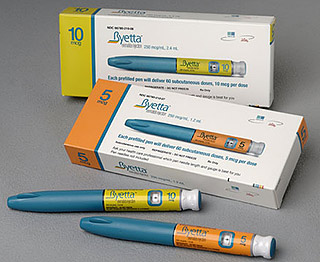
Byetta's back in the news, and once again not in a good way. "Amylin Reports Four Additional Deaths With Byetta" is how Reuters has it.

As we wrote last week, the Byetta experience underscores some fundamental challenges facing the industry (and investors) in the new era of drug safety. This is a case where there seems to be a big disconnect between the seriousness of a safety issue from the regulatory perspective (where a safety "update" by FDA treated two deaths from pancreatitis as important information for prescribers, but not a call to action) compared to the reaction of investors ("The sky is falling!").

But, whether or not FDA intended to sound the alarm about Byetta, the stock market reaction made pancreatitis a big story. Or, put another way, the sky may not be falling but Amylin's stock price certainly did.

Now, a week after the news broke, Amylin tried its hand at communicating safety information, hosting a teleconference to offer "context" for the FDA safety update.

That included the news of four additional case reports of Byetta patients who experienced pancreatitis and died. For analysts on the call, though, that "news "sounded like a non-event. Amylin carefully explained that those four deaths, though all associated with pancreatitis, were already reported to FDA, before the agency issued its recent safety "update" on the GLP-1 anti-diabetic. In other words, the agency agreed with the sponsor that they weren't worth talking about publicly. In three of the four cases, Amylin says, it has obtained case reports that support the view that the cause of death was unrelated to pancreatitis or Byetta. In the fourth case, Amylin says it has been unable to obtain any additional information.

Amylin also discussed the deaths in the broader context of outlining the overall risk of pancreatitis seen with Byetta (about 1 in 3,000) and the more severe hemmorhagic/necrotizing pancreatitis that triggered the latest alert (less than 1 in 10,000). And, the company says, there is no indication whatsoever that the rate of pancreatitis associated with Byetta is any higher than the expected rate in the overall patient population.

Well, Amylin shares are down again today (as are marketing partner Lilly's).

This raises two more questions in our minds for others in industry to ponder as the new drug safety era takes shape.

(1) FDA recognizes that it needs to do better when it comes to risk communication. But do sponsors?
(2) In a world where the line between partner and prey (cf. Roche/Genentech, Bristol/ImClone) is always fuzzy at best, how does "Safety First" volatility affect the stability of partnerships?


Amylin's investors haven't been shy about voicing their feelings that FDA is being unduly alarmist about the pancreatitis issue. (And, privately, we've heard the same thing from executives who work for the sponsors.) But this is a case where FDA issued safety information in about the least alarmist way it could have--short of keeping its mouth shut.

And if you think keeping its mouth shut is an option for FDA right now, you haven't been paying attention.

But what about the sponsors? The question that begs to be asked is why Lilly and Amylin waited a week to hold a conference call. Analysts who put that question to Amylin say the answer was that the company didn't want to upset FDA by appearing to challenge or contradict its safety communication. (And in holding the call at last Amylin carefully avoid doing so.)

Our response to that objection is: what would an angry FDA do that is worse than what is already happening to Amylin? The stock was down 20% and investors are starting to write off hopes for Byetta LAR.

Still, if Amylin and Lilly were afraid of annoying FDA, then why hold a call at all? The delay made the issue seem ominous. Just the scheduling of the call caused Amylin shares to fall. Then the company said very little that isn't already in the public domain about the context of pancreatitis--and apparently by failing to offer anything new its reward is to see another stock price decline.

We don't claim to know the right way to manage investor communications about these kind of emerging safety issues, but we're pretty sure this isn't it.

What we do know is that sponsors have to prepare now for how they are going to handle a circumstance like this. Amylin and Lilly may have been caught flat-footed by the reaction to the FDA safety notice, but that is no excuse. In today's world, the news could just as easily have been sparked by an international regulator, or by a prominent academic (say, Steve Nissen has been quiet lately hasn't he?), or in the favorite phrase of former FDA deputy commissioner Scott Gottlieb, by any 18 year old with a computer and access to Wellpoint's database.

Our modest proposal for a better way: why not hold this conference call before FDA issues a safety update? It would take a brave sponsor to do that -- in effect announce to investors that it has submitted six fatality reports to FDA. Still, in hindsight, we bet Lilly and Amylin would be better off right now if that was the approach they took.

Which leads into the second issue, since an effective communication strategy presumes that the two sponsors have the same objectives in mind.

Viewed from the standpoint of the Byetta brand team, there is no doubt that the partners' interests are aligned and this safety scare is a huge problem.

But what about from a strategic perspective? The Roche/Genentech deal has already triggered speculation about other biotech buyouts to come, and Lilly/Amylin is on everyone's list of possibilities. Lilly, remember, already showed its willingness to go down this path when it bought its Cialis partner Icos.

If the market is overreacting to the pancreatitis issue, Lilly can do more than just assert its confidence. It can put its money where its mouth is and buy Amylin out. It wouldn't be cheap: Amylin is valued at just under $3 billion. But that is less than half its value a year ago before the pancreatitis issue first emerged.

Then there is this: a new posting on ClinicalTrials.gov showing that Lilly is moving its own GLP-1 agent into Phase III. That certainly got investors' attention. Does Lilly think it has a better product than Byetta?

(Lilly may even have an extra incentive to buy Amylin: according to our Strategic Transactions database, the Byetta contract includes "option compounds" in both Lilly's and Amylin's pipelines to which the partners have reciprocal rights. While the names of the compounds and the option periods have been redacted out, our bet is that the "option compounds" represent possible competitors to Byetta. So if Amylin has got any claims to Lilly drugs -- maybe indeed this Lilly-discovered GLP-1 -- then Lilly would have some extra incentive to buy out Amylin now).

We don't pretend to know Lilly's plans for its Amylin partnership, but we do know that the challenges of mastering risk communication aren't any easier when there are two sponsors involved.

Friday, August 22, 2008

DotW: Dog Days

As the dog days of summer come to an end, it's time for last-minute barbeques and beach trips before the frenetic fall calendar of investor and scientific meetings commences. It's been a week filled with news--though not necessarily of the biobucks variety.

Lilly and partner Daiichi Sankyo published positive Phase III data for their anti-platelet drug prasugrel in the European Heart Journal, while shares of Amylin took a bath thanks to concerns that the drugs may cause pancreatitis. Meantime, a group of Harvard researchers published a study in the New England Journal of Medicine this week questioning the cost-effectiveness of HPV vaccines such as Merck's Gardasil and GSK's Cervarix.

The Food and Drug Administration must have finally used up all its "approvable letter" stationery. Johnson & Johnson's Doribax, an IV-antibiotic already approved for intra-abdominal infections, has the dubious honor of receiving the agency's first "complete response" letter regarding its use to treat hospital-acquired pneumonia. J&J, which declined to make the letter available to journalists at The Pink Sheet Daily, is currently "reviewing the agency's letter and will work to resolve any outstanding questions," the pharma said in a statement.

But dog gonnit. We aren't just waiting with baited breath for J&J to respond to regulators. We continue to watch the Roche/Genentech chess match. Roughly one week after it rejected Roche's initial buy-out offer, Genentech announced a $371 million retention plan that covers "substantially all employees," including executive officers in lieu of the biotech's planned 2008 stock option grants. Whether the proposed payola is enough to convince senior execs to remain at the company is a subject of heated debate, as regular readers of both CafePharma and Derek Lowe's In the Pipeline already know.

As we enjoy the last hazy days of summer, here's a look at the week's deals....


BMS/PDL: PDL BioPharma is a biotech that has been dogged by troubles, but the company announced a bit of good news this week: the company partnered its Phase I antibody for multiple myeloma, elotuzumab (formerly known by the tongue-tripping moniker HuLuc63), to BMS in a deal worth a modest $30 million up-front and up to $480 million in additional development and regulatory milestones. The deal also gives BMS an option to expand the collaboration to include PDL241, another antibody still in preclinical trials. The deal is back-end loaded, requiring PDL to complete on-going Phase I studies and provide support for Phase II trials, but does allow for profit-sharing on elotuzumab sales in the US. (Outside the US, PDL will receive undisclosed sales royalties.) Still investors are likely to view the news as positive given the risky nature of elotuzumab, a first-in-class therapeutic that binds to a cell-surface protein called CS-1 that's found selectively on myeloma cells. And the announcement deflects concerns about recent or impending staff departures: Pat Gage, PDL's CEO left in late May and the company's CSO, Donald Richard Murray, will resign at the end of this month. For BMS, the deal shows the New York-based pharma is conducting business as usual despite the drama associated with its proposed takeover of ImClone. Moreover, it deepens the company's footprint in oncology, especially the multiple myeloma space, building on the pharma's May acquisition of Kosan, which has the Hsp90 inhibitor tanespimycin in Phase III trials.


TEVA/Cel-Sci: Cel-Sci announced Tuesday that it gave Teva the OK to market and distribute it's head and neck cancer drug Multikine in Israel and Turkey. Precise financial details weren't disclosed but once the drug has been approved, Cel-Sci will make the product, while the Israel giant will be responsible for sales. Teva will also participate in the global Phase III clinical trial and fund a portion of the studies. The stock bounced on the news but sharply retreated on a day generally associated with market turmoil. The steep drop prompted Geert Kersten, Cel-Sci's CEO to issue a letter to shareholders, saying:

You asked, "How is it possible that the stock can be down after such a good announcement?" As the company's largest shareholder...I am as puzzled andas disappointed as you.


We've noted before that licensing deals don't always give company stock prices a much needed bump. But in this case, Kersten and others believe something nefarious may be afoot as short sellers "painted the tape," illegally dumping large volumes of the stock just before the close of business August 19 in order to make the stock look weak and unattractive. Kersten implores his shareholders to contact their congressional representatives to convince regulators to delve into the trading records of the last several weeks to resolve the issue. Meantime The IN VIVO Blog will continue to follow the situation and update you with any further news.

Lilly/Monsanto: Lilly continues to pursue a diversified business strategy, announcing late Wednesday that it would pay $300 million for rights to Monsanto's synthetic milk-producing hormone, Posilac, which is better known as recombinant bovine somatotropin (rBST). In addition to global sales rights, Lilly also obtains the Georgia-based manufacturing plant as part of the deal. The announcement comes at at time of growing consumer opposition to the use of hormones, particularly in dairy and meat products. Still, for many pharmaceutical companies, the looming threats of patent expiries and increased regulatory scrutiny make diversified business models built on generics or consumer products-a la Novartis's stake in Alcon and Daiichi's purchase of a controlling interest in Ranbaxy--more attractive. And Lilly has showed in other ways its interest in mitigating risk. Earlier this summer, it partnered its Phase III Alzheimer's drug with private-equity play TPG-Axon and Quintile's NovaQuest unit and off-loaded its R&D risk by teaming up with Covance. For its own part, Monsanto's decision to sell-off Posilac is in keeping with a stated mission to divest of smaller animal units in order to concentrate efforts on popular crop-agriculture product lines, including the herbicide Roundup.

King/Alpharma: Latebreaker! King Pharmaceuticals takes top dog in biobucks this week with its $1.4 billion unsolicited bid to acquire Alpharma. The Tennessee-based specialty pharma is behaving more like a dog with a bone, threatening to turn hostile if Alpharma's board refuses to accept the bid, which it apparently presented to the company in early August. Alpharma execs weren't available for comment--of course--but Reuters reports that the company appears to have rejected the bid. King's offer of $33 a share represents a 37% premium over the $24.04 closing price of Alpharma's stock on August 21. Not too surprisingly, Alpharma shares surged 41% premarket to $34, while King fell 1% to $11.12. By disclosing the rejected bid, King appears to be putting pressure on Alpharma in hopes of completing a friendly deal. That King is willing to go to extreme measures shows its desperation. Earlier this month, King reported that its second-quarter net income tumbled 34% as sales of its blood-pressure drug Altace stalled thanks to competition from generics. After losing a patent case last year, King has sought to refocus its portfolio with an emphasis on pain therapeutics. With its extended release morphine product Kadian and the NSAID containing Flector patch, Alpharma would give King several branded products in this arena.

(Photo courtesy of Flickr user NinJA999 courtesy of a creative commons license.)

Tuesday, August 12, 2008

The Case for Byetta LAR (Part 2)

Amylin and Lilly have high hopes for Byetta LAR, a once-weekly formulation of the incretin mimetic exenatide. Analysts are (as they tend to be) of two minds, with opinion ranging from those who think LAR may fairly quickly become the dominant brand in the entire diabetes class to those who wonder whether it will even make it to market.

We will leave the debate over the commercial prospects to others. But we do think LAR looks to have a winning profile from the regulatory perspective.

That, to put it mildly, is counterintuitive. We just wrote that it is harder than ever to get new type 2 diabetes drugs on the market. And we’ve said previously that it is harder than ever to get line extensions to market. (Remember Cordaptive?) That sure doesn’t sound like a good prognosis for LAR.

But this may be a case where two wrongs do in fact make a right.

How so? Well, first, this is a circumstance where it definitely helps to be developing a line extension rather than a new molecule. Here is how Amylin CEO Dan Bradbury described the situation during Amylin’s second quarter conference call. “The FDA panel meeting really focused on cardiovascular risks associated with new chemical entities,” he said. “That is one of the major differences here.”

Indeed, the panel vote does imply that marketed antidiabetic products just got a little more valuable. In fact, one implication of the latest advisory committee vote is that the decision by FDA to leave Avandia on the market is an even bigger victory for GlaxoSmithKline than it appeared. (An advisory committee voted overwhelmingly last year to allow continued marketed of the drug. FDA’s internal Drug Safety Oversight Board agreed, but by a single vote. And ultimately the decision came down to CDER Director Janet Woodcock, who opted to allow continued marketing.)

Now, Avandia (like other marketed products) will be expected to generate outcomes evidence—but at least it can continue to generate revenues in the meantime. And the odds of another TZD coming into the market any time soon just when down. So maybe, just maybe, GSK will actually see sales of the franchise rebound a bit in the years remaining before patent expiry.

But Byetta LAR is not a case of asking FDA to approve a new agent to lower blood sugar, but rather a case of asking FDA to approve an improved version of an already marketed drug. And, in fact, of a drug that has an attractive cardiovascular risk profile, given Byetta’s effects on weight and lipid levels.

That alone, though, may not be good enough in the current regulatory climate. But here’s the kicker: FDA can use the LAR approval to ensure it gets the outcomes data to support its decision to approve Byetta in the first place. The agency, of course, already asks for that data routinely—but as everyone saw with Avandia, those post-marketing commitments are seldom sufficient to generate definitive conclusions about the kinds of questions the committee now wants answered.

FDA, though, has a new tool it can use going forward: mandatory post-marketing study requirements, complete with the ability to levy fines against manufacturers who fail to deliver data by an agreed upon time. As we’ve said before, this changes everything about Phase IV.

The new authority is much easier for the agency to apply prospectively, to newly approved drugs (or at least new applications for expanded uses, new labeling, etc.). The agency can (and in the case of type 2 diabetes, we bet it eventually will) go back and add post-marketing requirements to already marketed products, but that is a process that will take some time.

So, Lilly and Amylin have a two-fold case for Byetta LAR. It is an improvement over an already marketed drug (since, the companies say, it provides better glucose-lowering control and increased convenience)—and it also gives FDA the opportunity to finalize mandatory outcomes studies for exenatide sooner than it otherwise could.

And, as an added bonus, it fits perfectly with the companies’ commercial positioning of the product. Lilly and Amylin are already planning a large cardiovascular outcomes study based on extensive trials suggesting beneficial effects on surrogate endpoints. So it shouldn’t be hard for them to commit to FDA to do such a study as a condition for approval.

All of which means Byetta LAR may turn out to be the right product for the current regulatory climate.

Of course, if the commercial product isn’t the same as the one used in clinical trials, all bets are off…

Monday, August 11, 2008

The Case for Byetta LAR (Part 1)

Lilly and Amylin say they have one regulatory hurdle to cross before filing for the long-acting formulation of exenatide (Byetta LAR): demonstrating comparability between the clinical formulation of the drug and the proposed commercial supply manufactured by Amylin in Ohio.

Amylin CEO Dan Bradbury told investors during the company’s second quarter conference call July 21 that a recent meeting with the agency gives the company great confidence in its projection of an NDA filing sometime in the next year. The company has said all along that it expects to file by the end of the first half of 2009, Bradbury said; the meeting with FDA suggests that timeline may be conservative, since the agency may end up not requiring a full-fledged clinical crossover study.

At a time when investors are focused on the now clear, unequivocal emphasis on outcomes endpoints for new type 2 diabetes drugs, Amylin’s confidence in a near time filing date for Byetta LAR is big news.

This is a tough time for type 2 diabetes drug development. An FDA advisory committee essentially endorsed the Steve Nissen worldview: that blood sugar reduction is not an end in itself, and new drugs for use by diabetics need to provide sufficient evidence of outcomes benefits—especially cardiovascular outcomes—as a condition for approval.

Our colleagues at “The Pink Sheet” have extensive coverage of the meeting, and—more importantly—FDA’s takeaways from the meeting.

But in case you missed it, after a morning’s worth of warm-up, Steve Nissen—Cleveland Clinic cardiologist and shadow FDA commissioner—went up to the podium and called out the entire profession of endocrinology, telling the committee that they have made glucose reduction a goal in itself and lost sight of the bigger picture. Some committee members fumed visibly—but the panel spent the next day-and-a-half following the agenda laid out by Nissen.

The committee agreed with his premise—that it is no longer acceptable to approve drugs solely based on the ability to reduce HbA1c levels—and with his overall approach to assessing cardiovascular outcomes. They punted on some questions—like exactly how much outcomes research to expect, and under exactly what conditions the studies would be necessary prior to approval instead of as post-marketing commitments.

So what does all this mean, other than demonstrating once again the incredible influence Nissen has on drug development and use in this country at this moment in history?

First, it confirms that the bar is indeed higher for type 2 diabetes drugs, that—in effect—they will be governed by a quasi-superiority standard of the type that FDA has begun talking about for NSAIDs (and now antipsychotics).

That in itself should not be news: Remember Pargluva? But it is now clear that new agents for glucose reduction will be expected to demonstrate some compelling reason for approval—better HbA1c control, evidence of reduced toxicity, something—or else face the risk of being asked for definitive proof of outcomes prior to approval.

So there is plenty of reason to wonder whether Lilly and Amylin can in fact move forward with LAR as planned (or even faster than planned).

We think they can…and we’ll explain why tomorrow.

Friday, August 8, 2008

Deals of the Week: We're Back

Didja miss us? Not even a little?

Expect posting to return to its normal erratic schedule as of next week, and enjoy this dog days of summer deals-of-the-week post as you gear up to watch what is sure to be an unintentionally psychedelic opening ceremony for the 2008 Summer Games in Beijing.

We may have missed a few interesting tidbits over the past couple weeks--such as CytoChroma's alliance with Mitsubishi-Tanabe, GSK's layoffs, and probably a whole lot more (the logical conclusion to the BMS/Imclone saga trundles along though, so i'm sure we'll have a chance to chime in later).

And we'll make it up to you: be sure to check in next week for a complimentary PDF of our coverage (to date) of the Roche/Genentech situation ... for now you'll have to make due with:


Lilly/Covance: Read our earlier post on Lilly's leadership in creative financing of R&D, here (or just scroll down).

The Medicines Co./Curacyte: In a play to get its hands on Curacyte Discovery's lead CU-2010 serine protease inhibitor, The Medicines Co. has acquired the German biotech for €14.5 million up front plus a potential €10.5 million milestone should the drug move into Phase II (a royalty and commercial milestone payment enter the mix should 2010 hit the market). The move is unusually early-stage for MDCO, and as our colleagues at The Pink Sheet DAILY point out, driven by the uncertain fate of the patent situation around the company's Angiomax franchise.

Roche/Metabasis: Liver specialist Metabasis announced on Thursday a deal with Roche to give the Big Pharma's HCV nucleoside drugs better liver-targeting properties. The tweaking will cost Roche $10 million up-front for the two-year research collaboration and up to $193 million in milestones plus a royalty should a development candidate be selected. Though it might seem like the liver is the organ most drugs will find even if blindfolded and spun around three times, Metabasis' technology is designed to allow for lower dosing of drug, and therefore better side-effect profiles--a welcome scenario in a space where nucleoside HCV polymerase inhibitors have failed thanks to more problematic risk/benefit ratios than expected.


Celgene/GPC: It has been a rough road for GPC ever since the next-generation oral platinum chemotherapy satraplatin hit the skids last October. On Wednesday, the biotech's European commercial partner, Celgene, which inherited the deal from Pharmion, pulled the plug on the firms' collaboration and approval anywhere seems unlikely without a new clinical program. Celgene had yanked the drug's European MAA last week, and the writing was on the wall. GPC continues to evaluate M&A opportunities.

Thursday, August 7, 2008

Thought-Leadership in Hoosiertown: Lilly’s Innovations in Pharma Finance

It was hardly groundbreaking, as the Covance/Lilly deal was described by one of the PR flaks who’d pre-alerted us to the deal (you can read more of our Pink Sheet Daily coverage here).

But as one piece of the overall strategy Lilly has been fitting together over the last few years, it does indicate to us that those isolated Indianapolites are now the leading Big Pharma thinkers when it comes to financing R&D.

Let’s not go overboard here. The Covance deal isn’t a brand new concept. Aventis (and a few others) did more or less the same thing with Quintiles in the previous decade (see this piece, for example: you can get it for free and it will outline the key issues Lilly also had to wrestle with).

But add this deal together with Lilly’s recent three-way Alzheimer’s funding/development program with the private equity firm TPG-Axon and Quintiles’ NovaQuest unit, plus Lilly’s Asian forays in cooperative discovery (see this analysis, for example), and the company’s FIPNet notion is looking like a lot more than a marketing slogan.

Lilly, in short, seems almost uniquely serious about both variabilizing and off-loading development expenses. The first bit is pretty easy and relatively popular – all drug companies want to cut expenses. Lilly’s sale of a standalone drug-development facility and transfer of employees is simply one technique among many (like firing people, an activity with which Big Pharma has gotten a lot more comfortable over the last two years).

The second bit is harder: we haven’t seen any Big Pharmas except Lilly turn in a big way to private equity to help them fund high-risk R&D and share in the returns. (Lilly and other Big Pharmas have let NovaQuest take on some development risk in return for milestones and royalties, but those are pretty limited deals; Bristol has of course rather famously turned for financing and development help to other Big Pharmas).

There have certainly been plenty of discussions with PE – we ourselves know of several. But by and large the investors we’ve spoken with want more than just a couple of high-risk projects in these financing arrangements – they want a market basket of compounds, and so far as we know, no major drug company has been willing to share the upside that broadly. (Interesting that Mikael Dolsten, who was running an incipient Pharma-funding operation for Orbimed, gave up that job to run Wyeth’s R&D organization.)

In this regard, the Lilly/TPG deal was a compromise: two different Alzheimer’s compounds, both about ready to start Phase III trials, but hardly the four or five programs that would make most PE players comfortable with the development risk.

CROs, meanwhile, are anxious to take advantage of Big Pharma’s new attitude toward infrastructure and risk sharing. Their businesses are booming with Big Pharma’s boom in Phase I and II programs; they need more people to handle the additional trials. Getting them from Pharma in a friendly sort of way is good business for two reasons: the drug company pays the costs of their new employees for the first year or two; and it’s likely that the Pharma will be more inclined to send a preponderance of their new business Covance’s way. We very much doubt, incidentally, that other Big Pharmas will shun Covance because it is too cozy with Lilly: there’s simply too much momentum towards outsourcing in general.

If this merry-go-round of employee transfers stops – it’s fueled by the boom in early-stage productivity -- the CROs will be stuck with the firing duties and expenses of doing so, as was Quintiles when it ran into problems earlier this decade (problems which, among others, eventually led to its LBO). But in 2008 – unlike 1999 -- drug companies are pretty committed to outsourcing; should their mid-stage pipelines dry up any further, they’re as likely to layoff more of their own employees as they are to use them on work taken back from CROs.

Image from flickr user Marttj used under a creative commons license.

Friday, July 25, 2008

DOTW: Short, Sweet, and Not Just Roche

Thanks to some well-timed vacation for a few members of your hard-working blog team here at IVB things might be a little quiet for the next week or so. Not entirely so, but just enough that you'll have a dull ache somewhere in the bottom of your soul. Take an antacid, you'll be fine. Probably.

But what a week it has been, and we're not just talking about the NL East race. Roche has kept us all entertained with its bear-hug of Genentech and--as if to say, hey, its business as usual here in Basel--two further acquisitions: RNAi delivery play Mirus and the antibody screening platform company Arius.

We hope we've entertained you with our coverage here and elsewhere within the broad FDC-Windhover family of fine publications, and we've had a good response to our poll about the wisdom of Roche's $44 billion move: 54% of the nearly 200 responses we've had thus far think that the Roche/Genentech relationship wasn't broke and so Roche is stupid for trying to fix it. If you haven't voted, go ahead, the poll is still open. And don't forget to suggest other ways Roche could spend all that money: we've started a list here.

Of course this week hasn't been all hand-wringing about Roche's moves, other companies have been busy as well. GE bought Vital Signs for $860 million. Summit and Biomarin teamed up to develop Summit's Duchenne muscular dystrophy preclinical candidate. GSK pronounced its tie-up with the South African generics player Aspen a "transformative" deal. Sanofi-Aventis' Sanofi-Pasteur vaccines division today snapped up UK vaccine play Acambis. And Lilly decided to find an alternative way to finance its Alzheimer's pipeline with a deal involving Quintiles' NovaQuest division and the massive investor TPG-Axon (see their earnings release for more details).

We're tired just thinking about all that.

image from flickr user Derek Farr used under a creative commons license.

Friday, July 18, 2008

Prasugrel: My August Looks Free…and So Does My September

Eli Lilly’s prasugrel team may have some free time on its hands in August and September if FDA’s advisory committee calendar is any indicator.

After FDA extended the priority review deadline of the novel anti-platelet drug by three months on June 23—the deadline was June 26—to September 26, speculation began in earnest around whether the drug would be required to go before the agency’s Cariovascular and Renal Drugs Advisory Committee.

August 19-20 had been tentatively blocked off for a meeting of the Cardio-Renal panel and Wall Street, FDA watchers and industry stakeholders pointed to the dates as a strong possibility for a prasugrel review.

Well, a quick look at FDA’s advisory committee calendar shows the blocks have suddenly disappeared. Moreover, September is completely free of any advisory committee meetings and no new Cardio-Renal meeting has been added to the end of July. We should note that a tentative Peripheral and Central Nervous System Drugs Advisory Committee meeting blocked off for August 6-7 has been postponed.

Do with that what you want. Of course, FDA can add a meeting at any time.

But, if FDA sticks to the extended review deadline and the calendar remains as is, it appears that prasugrel will not go before an advisory committee before a final decision on the application is made. That’s probably a positive sign for Lilly because the committee would have been used to address uncertainties with the application and the postmarket surveillance REMS program.

If, however, FDA adds a meeting in late August or early September, that almost certainly means the prasugrel review will miss another deadline.

A Lilly official says the company still has not been informed by FDA that prasugrel will require an advisory committee review. FDA says there is no Cardio-Renal panel scheduled as of right now. We still think prasugrel will be approved on its first cycle.

We’re not going to rehash our reasoning but you can read it by clicking here and the follow-up is here.

Thursday, July 26, 2007

Evista Update

Lilly's response to my questions about the Evista press release (subject of a July 25 post):

"Following the July 24 meeting of the Oncologic Drugs Advisory Committee (ODAC), Lilly issued a press release containing factual information about the meeting’s outcome pertaining to Lilly’s osteoporosis drug.

'We believe that our actions were consistent with the laws and the consent decree,' said Anne Nobles, Vice President, Compliance and Enterprise Risk Management. 'Lilly takes very seriously our responsibility to abide by all the laws governing our business practices and are committed to ensuring our employees' actions reflect the highest legal and ethical standards of conduct.'"

Wednesday, July 25, 2007

Lilly’s Evista for Breast Cancer Prevention: Vindication or Provocation?

It looks like Eli Lilly & Co.’s raloxifene Evista is poised for approval for reduction of the risk of breast cancer. A Food & Drug Administration advisory committee voted yesterday to support use of the drug for that use in post-menopausal women at high risk of breast cancer, and—more narrowly—to support use for breast cancer prevention in post-menopausal women with osteoporosis.

The agency itself has until September to make a decision on Lilly’s pending supplemental FDA. But all signs point to an approval that, whatever else it means, will feel like vindication for Lilly.

Just 18 months ago, the company paid $36 million to settle an investigation into its promotion of Evista. The drug has been approved for use in osteoporosis for a decade. But in 2005 Lilly pled guilty to a criminal misdemeanor charge that it promoted the drug for breast cancer prevention and cardiovascular risk reduction. The conduct involved occurred in 1998; the company simultaneously settled related civil claims dealing with conduct that continued into 2000, but Lilly did not admit guilt.

In addition to paying the fine, Lilly entered into a consent decree prohibiting it from promoting Evista for breast cancer prevention without formal FDA approval.

Not that you would know that from reading Lilly’s press release announcing the advisory committee vote. Underneath a headline announcing the advisory committee vote, Lilly includes what starts out sounding like a disclaimer but ends up sounding like a claim of effectiveness for the new use: “EVISTA is currently indicated for the prevention and treatment of osteoporosis and may provide an important option for postmenopausal women at increased risk for breast cancer.”

Now that sentence is surely unobjectionable on its face. But it definitely counts as bold talk from a company that just signed a court order saying it is “permanently enjoined from directly or indirectly promoting Evista for use in preventing or reducing the risk of breast cancer…unless and until it is authorized to do so by the FDA by the approval of a supplement to the New Drug Application for Evista.”

Especially when you consider that the DoJ investigation included, among other allegations, claims that Lilly promoted the off-label use through its press releases about Evista. (Read the Justice Department’s summary of Lilly’s conduct here.)

Of course, the consent decree includes other provisions, notably one stating that “nothing in this Decree shall be construed to limit or expand the rights of Eli Lilly under the First Amendment of the Constitution.”

When it comes to off-label promotion, that is precisely the question: what are the rights of drug companies like Eli Lilly under the Constitution? Free speech advocates argue that companies have the right to engage in scientific discourse about their products, even if they are talking about uses not approved by FDA. After all, if raloxifene works to prevent breast cancer, millions of women would benefit from knowing that as soon as possible.

Prosecutors see it differently: the FD&C Act prohibits promotion of unapproved uses of drugs, and they have gone after many companies for promoting their drugs beyond the label. There have been several recent settlements (with the Evista case one of the first) in which manufacturers have accepted that premise—explicitly or implicitly—rather than fight the charges in court.

In our next issue, The RPM Report will be taking an in-depth look at the current state of uncertainty in industry after the recent wave of settlements.

As the advisory committee vote indicates, Lilly’s statement that Evista “may be an important option for post-menopausal women at increased risk for breast cancer” is undeniably true. But it was undeniably true a decade ago too. And that didn't keep Lilly out of trouble.

Now, here’s a thought: Johnson & Johnson made headlines recently when it offered a money back guarantee to the UK National Health Service on its cancer therapy Velcade, promising to pay back the government if the therapy doesn’t prove cost effective.

Maybe Eli Lilly & Co. should take a page from that playbook. But instead of offering a refund to the US government, maybe Lilly should ask for its money back from the Department of Justice. Justice.

Monday, July 9, 2007

While You Were Dominating the Competition


If you were too busy playing in the Wimbledon semis and finals this weekend (or maybe just watching) to keep up with the news, IN VIVO Blog is here to help.

Wednesday, May 30, 2007

Talking of Sons-of-Drugs…

Just when we thought that drug companies had given up on some of their more blatant life-cycle management tricks, snubbed by stingy payors who now know their left-handed from their right-handed isomers, out come Sanofi-Aventis and UCB with news of US approval for their new anti-histamine Xyzal. The Wall Street Journal’s Health Blog was quick to make the link—which the companies’ press release somehow omitted—and proclaim Xyzal as son-of-Zyrtec, which, incidentally, will lose patent protection in September.

Not much new drug company behavior there, then. But WSJ’s timely outing of Son-of-Zyrtec reminded IN VIVO Blog of another, somewhat more unusual Son-of-Drug story that you might just have missed.

Remember Lilly’s problematic Xigris, whose market performance has been as disappointing as the pre-launch anticipation was sizzling? In case you don’t: Xigris came to market in 2001, the first ever treatment for severe sepsis, after years of top-notch protein science and engineering inside Lilly, with many hearts and minds at stake.

Xigris is a case study of, simplistically, how too much innovation can backfire (just as too little can, also). Particularly since Lilly appears (with that wonderful thing called hindsight) to have launched the drug in too broad a population, which led to the brand image being tarnished by cases of serious bleeding. Lilly ain’t giving up on Xigris—there's too much money under the bridge for that. It's busy seeking biomarkers to find out which patients can benefit most. “We’re in invest mode” on Xigris, sum up Lilly executives.

But—and here, belatedly, is the point—Lilly was (after some persuading) quite happy to part with son-of-Xigris, theoretically a better-designed molecule, for not very much money and no claw-back to speak of. The Big Pharma last month quietly licensed the Phase I candidate to a relatively unknown Canadian biotech called Cardiome. Unknown, perhaps, except for the fact that Cardiome's CMO is Chuck Fisher, the man behind Xigris’ development and approval at Lilly.

The deal is somewhat personal, in other words. It's Fisher’s chance to make good what, to put it frankly, went bad within Lilly. He had a job persuading his own board to agree to the deal, even though Cardiome paid just $20 million up front and up to $40 million in milestones (which don’t start until 2009) for all possible indications (and there could be dozens). It’s a risky, if relatively cheap, bet for Cardiome: the drug’s father has proved an expensive failure, and although Cardiome is testing Son-of-Xigris for cardiogenic shock in the first instance, that's still a tricky indication with no pre-clinical models.

Still, if Son-of-Xigris does make it to market one day, in anything, it will be interesting to compare its development and approval path within a small, focused biotech with that of its father, who was brought up in Big Pharma: nature vs nurture. As we’ll suggest in the next issue of IN VIVO, the Xigris family of drugs may just be better suited to biotech. Certainly Fisher reckons he can do a better job marketing Xigris’ offspring than Lilly could.

Friday, May 25, 2007

A Boon for Byetta?

As doctors, patients and regulators rush to make sense of the recent NEJM study showing an increased risk of heart attack among patients taking GSK's Avandia, it looks like good news for Lilly's Byetta.

The GLP-1 analog--or 'smart drug', as Lilly execs like to call it, since it stimulates insulin secretion in a glucose-dependent way, reducing the risk of hypoglycemia--has already done pretty well since its launch in June 2005. It suffered a brief blip in sales when Merck's DPP-IV inhibitor Januvia arrived (since Januvia, although less effective, comes in pill form and Byetta is a twice-daily injection) but has since recovered. Sales will be about $700 million this year.

And things can only get better. "Both Januvia and Byetta will benefit from Avandia's problems, and as physicians see that Januvia isn't that great, they'll move to Byetta," David Kliff, publisher of Diabetic Investor, told the IN VIVO Blog.

Januvia seems safe--so far--but doesn't actually work that well, as we explained in a previous issue of IN VIVO. Byetta, on the other hand, not only is extremely effective at controlling blood sugar (it prevents sugar lows plus, because of its effect on glucagon, sugar highs) but also helps diabetic patients lose weight.

And that, frankly, is just perfect, since many diabetics are overweight, and since insulins tend to exacerbate that problem. So rather than being stuck on insulin, getting fatter and with poorly controlled blood sugar levels (only about a third of insulin users actually control their blood sugar effectively), patients "start a cycle of success," enthuses Lilly's global brand development leader for Byetta, David Vondle. "They have more energy, start feeling better, so they take a walk, and that helps with weight loss...and they're just more optimistic," he says.

Lilly's GLP-1 team probably feels pretty happy, too (unlike their cousins in the insulin department, who blew it). Not only has first-to-market Byetta brought a huge improvement to patients' lives, but there's an even bigger paradigm-shift on the way: a once weekly Byetta. "Every doctor is salivating for Byetta LAR," says Kliff.

They'll have to salivate until 2010, but it may be worth the wait: patients will be able to take just one weekly injection, rather than twice daily. That's 13 fewer injections per week.

That's a selling point if ever there was one. And, as with Avandia, where there's a winner, there's a loser. In the GLP-1 space, it might just be Novo Nordisk's human GLP-1 analog, liraglutide. It's due out a year or so before Byetta LAR, but Novo's not always the timeliest, and liraglutide is a once-daily. Read more in the next issue of IN VIVO.