Showing posts with label Health Care Reform. Show all posts

Monday, June 14, 2010

Health Care Reform: New Fees are New Factor For Partnerships

When GlaxoSmithKline and Pfizer established the HIV-focused joint venture Viiv in April 2009, it sent a bold statement about the commitment of the new partners to new business models and their commitment to creative business development activities. (See “The GSK/Pfizer HIV Venture: Another Sign of Change?” IN VIVO, April 2009.)

Heck, we liked it so much we nominated it for Deal of the Year.

Now that health care reform has been signed into law, it looks even smarter. Viiv turns out to be a brilliantly timed strategy to blunt some of the impact of the up-front costs of reform for biopharma companies.

Thanks to a new formula for calculating Medicaid rebates and the interaction of that formula on prices paid by State AIDS Drug Assistance Programs that cover HIV therapies, that class of medicine is taking a pretty big hit from reform in 2010. (See “Taking Lumps from Health Care Reform," just published on TheRPMReport.com.)

The impact was felt most acutely by Gilead Sciences, whose product line is very highly concentrated in HIV therapy. The company estimates the impact in 2010 at $200 million, or about 5.7% of its US pharmaceutical sales in 2009.

That ranks as, proportionally, the biggest reported impact from health care reform from any of the publically traded pharmaceutical companies tracked by The RPM Report.

And, naturally, it drew a lot of interest from investors during Gilead’s first quarter conference call April 21. Investors were particularly concerned about the ramp up in the impact on the company through the year; Gilead said the new Medicaid rebate rules reduced sales by $29 million in the first quarter, suggesting a significantly larger liability in the coming quarters.

The reason, Gilead explained, is that the pricing mechanism for drugs purchased by ADAPs lags behind the Medicaid rebate, so the bulk of the impact comes in the last quarter or two of the year.

And the sheer size of the adjustment surprised investors, given that Gilead already provides substantial price concessions to the ADAPs. “In early parts of the healthcare reform discussion, from a distance, we wondered like a lot of companies whether additional rebates would be applied to the payers where we have discounts already in place that are greater than the current 15% now moving to the 23% that have been mandated,” EVP Commercial Operations Kevin Young explained. “It is quite clear from the legislation that irrespective of the discount that you have in place to these federal players, an additional 8% has to be added and I think that’s the clarity that’s now come in the legislation.”

For Pfizer and GSK, on the other hand, the impact on the new Medicaid rebate on antivirals was close to a non-issue. Viiv is about half as large as Gilead in the HIV market, and so might be expected to face an impact of approximately $100 million from reform.

But for Pfizer, which only records income from the joint venture, the impact didn’t merit a mention. GSK records the revenue, but could describe it almost offhandedly in the context of an overall discussion of the manageable size of the reform. CEO Andrew Witty noted in response to a question on the relative exposure of the company to Medicaid and Medicare that “Viiv is a little more exposed than the average.”

Still, the new company did post a sales decline of 7% for the quarter—a result that might have been expected to prompt some comment if it were a $2 billion-plus brand reported by GSK, rather than an innovative HIV therapy joint venture.

That is a nice early return from the joint venture, but it does underscore the likelihood that features of health care reform will start to have an impact on business development.

Take, for instance, Bristol-Myers Squibb’s discussion of the importance of its relationship with Sanofi Aventis for Plavix in considering how the company will be affected in 2011, when a new 50% Part D discount program and market share fee take effect.

“Remember that the sales impact would be relatively higher than earnings due to the accounting treatment for Plavix, where we record 100% of sales, but share profits with Sanofi,” CFO Charles Bancroft noted.

For Viiv, that will not be as challenging an issue. Medicare Part D does cover HIV medicines, but the vast majority of AIDS patients in Medicare are dual eligibles who will not receive the donut hole discount. The market share fee is another matter, however; any sales through Medicare or Medicaid (but not the ADAP sales) will count towards the fee. The rules have yet to be determined, but as the partner recording sales, GSK is likely to be the entity that records the impact of the fee as well.

As the rules of the new Part D program and the calculation of the market share fee are fleshed out, business development executives should pay attention. Treatment of those items is likely to be an important consideration in future partnership agreements.

Friday, February 12, 2010

PhRMA Changes Leaders: A Dozen Candidates We Bet Won’t Get The Job

PhRMA CEO Billy Tauzin is stepping down at the end of June. We pointed out in our first post that he leaves some pretty big shoes to fill--so, naturally, we want to do our part to help.

We’ve come up with a list of 12 potential replacements for Tauzin. But before we tell you who they are, we should also say that we bet none of them gets the job.

Yeah, our tongue is firmly in our cheek on some of the candidates. But more importantly, we bet PhRMA will go in a different direction this time and look for someone less high profile than Tauzin (or almost any of the potential replacements we suggest).

PhRMA has traditionally preferred a leader who is not a nationally known political figure, someone with specific expertise in critical areas. Before Tauzin, its two heads were IP attorney Gerry Mossinghoff and international trade lawyer Alan Holmer.

In part that’s because PhRMA’s members recognize that, while national politics dominates the headlines, their business is built on the fine points of intellectual property, regulatory nuance and complex pricing/reimbursement policy.

But its also because—let’s face it—Big Pharma CEOs don’t want someone telling them what to do. Tauzin was hired to lead the board, and that’s what he did. But we’re betting the PhRMA board isn’t going to look to be led again any time soon.

Still, we can’t help imagining different national figures who might help PhRMA improve or adjust its position in Washington, and so offer you the follow list of possible candidates for the top job at the trade association….

Former Senate Majority leader Tom Daschle: Why not go all in on the Health Care reform deal by hiring the man who was supposed to run health care reform in the White House? Just don't forget to pay the driver!

Connecticut Democratic Sen. Chris Dodd: Probably the biggest name PhRMA could go after among current Dems in Congress. Dodd is retiring rather than face a tough reelection battle, and has a good relationship with Pfizer, a big Connecticut employer.

Pennsylvania Sen. Arlen Specter: He hasn’t been a Democrat for long, having pulled a Billy-Tauzin-in-reverse and changed parties last year. Pennsylvania is a big pharma state, and Specter has a strong record in support of R&D and intellectual property.

Richard Gephardt: The former House Democratic leader has done a lot of work with PhRMA on issues like supporting science in America. He also has pull with the labor unions. He’d be great--at least until November.

A health system CEO: Glenn Steele (Geisinger) and Dan Cortese (Mayo) both got consideration as potential heads of the Centers for Medicare and Mediciad Services because their respective institutions are viewed as models of innovative payment and delivery networks. Selecting someone like that would show PhRMA is serious about delivery reform in health care.

Biotechnology Industry Organization CEO Jim Greenwood: PhRMA lost a big member when Roche acquired Genentech and decided to follow Genentech’s decision to maintain a membership in BIO only. Since then, PhRMA has stepped up longstanding efforts to recruit smaller companies--even modifying its tagline in ads to brand itself as “America’s pharmaceutical and biotechnology research companies.” And its biggest members have been steadily bioteching themselves. So why not just merge the two groups?

America’s Health Insurance Plans CEO Karen Ignagni: If Tauzin’s health reform dealmaking is the problem, then Ignagni's refusal to deal must make her the solution. Plus she’s shown a Tauzin-like political flexibility, having once been a single-payor advocate before taking the reins of the group most committed to protecting private health insurance in the US.

Bill Thomas: Too many Democrats? Then why not tack Republican. The long-time Ways & Means Committee Chairman was the key architect of Medicare Part D-- which may be all the health reform PhRMA needs (or gets) in the end. Downside: Amgen would quit the association right away. (Or is that an upside?)

Former HHS Secretary Michael Leavitt: The former head of HHS under George W. Bush is a well respected former governor who has pull with his old constituency, a definite advantage over other candidates who would have that missing from their resumes. Leavitt has long held that you can’t have health reform without Medicare reform.

Mark McClellan: While we’re on the subject of former Bushies and skilled candidates who could play both sides of the aisle, how about former FDA Commissioner, former CMS Administrator, former Clinton Administration health economist, and current head of the Engelberg Center for Health Care Reform Mark McClellan. McClellan implemented Part D and would be the kind of detail-oriented CEO that Tauzin was not.

Former Senator John Breaux: He lost out to Tauzin the first time around for the PhRMA job, how’s about a second go around? He’s a moderate Democrat with friends all over Washington.

Maine Republican Senator Olympia Snowe: Give us the 60th vote for health reform and we will give you Tauzin’s old job! That would never happen…would it?

PhRMA Changing Leaders; Will It Change Tack in Health Care Reform?

The sense of uncertainty surrounding the impact of health care reform on the biopharmaceutical industry just went up with the news that Pharmaceutical Research & Manufacturers of America CEO Billy Tauzin will step down at the end of June.

The timing of Tauzin's departure should have been perfect. If health care reform had made it through as planned ahead of President's Day, now would be the perfect time for Tauzin to take a bow and leave the implementation to his successor. After all, Tauzin is 66, he has been with the association for just over five years--and is also past the five-year milestone in his recovery from intestinal cancer. If only health care reform was done, it would all seem so right.

But health care reform, to put it mildly, is in a state of flux, and so is PhRMA’s famous (or is it infamous?) $80 billion dollar deal for health care reform (or was it a $90 billion dollar deal, or more?).

As it happened, the timing of the announcement (late in the evening on a snowbound week in Washington) took a lot of people by surprise.

So naturally, everyone is wondering the same thing: Are things about to get REALLY bad for Big Pharma?

There are certainly good reasons to worry. First, as we pointed out here, the Democratic leadership appears to be convinced that one of the critical factors in the sour public mood for reform is frustration with the process—and, at least among some prominent Democrats, the PhRMA deal is a case in point.

And its not like Republicans are any happier with the PhRMA deal. Indeed, we are hearing something close to glee at the prospect that the industry will be asked to make the $80 billion contribution to fund other priorities before the year is through.

No question. It could get ugly. But it is far too soon to press the panic button.

Right now, no one can say for sure what will happen on health care reform. It is still possible that a bill very close to the one that looked ready to move in mid-January can make it into law. Failing that, big things could still move through Congress: things like filling in the Medicare Part D donut hole, follow-on biologics legislation, or health insurance reforms that would make expensive drugs more affordable for many people.

What Tauzin’s announcement does is give PhRMA flexibility: if things go well, they can keep the deal, either by working through the last steps of the process during Tauzin’s final months, or by sticking with it under his successor. And they can do so while fending off critics who claim it was a sweetheart deal all along: after all, the guy who cut the deal is out of a job, right?

On the other hand, Tauzin’s departure makes it much easier to turn to a scorched earth strategy if it comes to that. If the focus shifts from reform to punitive taxes, new rebates, populist measures like reimportation and price negotiation, then PhRMA will find it much easier to just declare the deal dead and take the gloves off in return.

We do think, however, that it’s a shame about the timing. Tauzin’s five plus years at PhRMA were a remarkable time, with the association pulling off the nearly impossible feat of transitioning from a quintessentially Republican organization into one that, if anything, may find itself too closely aligned with the suddenly not unstoppable Democratic majorities in DC.

You don’t have to agree with the policy to appreciate the skill it took to pull that off, building alliances across the spectrum of advocacy organizations in DC and across the aisles in Congress.

Sure, Tauzin wasn’t perfect--in the wake of the departure announcement, we’ve heard the rumbling that he didn’t focus enough on the details to translate the framework of “the deal” into the fine print that would make it work.

But we’d bet anything that PhRMA would be much worse off today if he hadn’t built bridges with organized labor, universal coverage advocates and other groups that don’t always see eye-to-eye with Big Pharma.

And we can honestly say that, while we know plenty of people who don’t agree with Tauzin’s positions, we’ve never met anyone who didn’t like him personally.

Those will be some pretty big shoes to fill. And in our next post, we’ll offer our thoughts on who PhRMA might pick to try….

Tuesday, February 9, 2010

Health Care Reform: Digging Out From “Paralyzing Snow”

The blizzard of 2010 tamped down the attendance during the annual Academy Health meeting in Washington DC February 8.

Attendance was about half of what it would have been after the paralyzing snowstorm (official weather term!) that dumped 20-30 inches in the DC metro area. Still, that’s a pretty good crowd all things considered. Health policy is clearly still a hot topic in Washington despite the blanket of snow.

The blizzard also gave HHS Secretary Kathleen Sebelius a perfect analogy to kick off a discussion of the status of health care reform during her opening keynote.

She complimented the organizers for staying the course, saying she had sympathy for those who work hard for months on end to put together a large and important endeavor—only to have 30 inches of snow fall the day before the meeting is scheduled: “Kind of the like the Massachusetts Senate election and health care reform.”

Sebelius noted the value of taking a moment to regroup, reconsider—and then made the case for pushing ahead. “I am confident there will be a comprehensive health care reform bill” signed into law this year, she predicted.

Sebelius did not extend the analogy any further, but we will. Blame the cabin fever if you must, but here is our list of nine ways that reviving health care reform is like digging out after a blizzard.
(1) Digging out is hard work: Our aching backs can testify to that, as can everyone on Capitol Hill, in the White House, and in the assorted lobbying operations on K Street as they try to figure out how to muster enough votes somewhere, somehow to get a health care bill through.

Sebelius noted that fact by repeating Obama’s comments from the
State of the Union address that the Administration didn’t take on health care reform because it was easy. Republican Hill staff the second day read the most recent polling data, suggesting that the portion of the population who likes the pending bill is 15%-20% less than the portion who disapprove.

It is not going to be easy to get this done.

(2) Piecemeal Approaches Don’t Work: Plowing half a street does no one any good. (Are you listening, DC government?) Similarly, Sebelius made clear that ideas for piecemeal reform aren't going to fly. The President remains “as committed to
comprehensive reform as ever,” she said. As a practical matter, you can’t cherry-pick reform: “the pieces are too intertwined.”

For example, Sebelius said, it is disingenuous at best to support health insurance reform without also supporting some form of mandate to prevent adverse selection.

Hill staff said the same thing (at least on the Democratic side): the pieces of reform are too interdependant to tease apart.

Republicans remain game to try—but they probably won’t get their chance this year.

(3) Getting around takes fancy footwork: Lot’s of twisted ankles and bumps and bruises in DC; avoiding a spill takes the grace of a ballerina and the balance of gymnast. Same with passing a comprehensive health bill at this point.

Here is the pathway people are currently talking about:

Step 1: The House passes a bill intended to fix the Senate bill. (Under the Constitution the House must originate all spending bills.)

Step 2: The Senate passes the fix-it bill via the reconciliation process. (Only 50 votes needed, but provisions must have budgetary impact—no policy fixes allowed!)

Step 3: The House then passes the Senate comprehensive reform bill already passed by the Senate on Christmas Eve.

Step 4: The President signs the comprehensive bill first, then the fix-it bill. The order is key: that way the fix-its replace the Senate’s language, even though the fix it passes first.

Simple, right?

(4) Snow Days Can Bring People Together: There is nothing like walking down the center of Connecticut Avenue with dozens of neighbors desperately seeking an open Starbucks to build a sense of community. While we haven’t seen a similar spirit of comity follow the Massachusetts election result, it isn’t for lack of trying (or at least trying to look like you are trying). Obama’s latest initiative is to invite the Republicans to a White House summit to exchange ideas on February 25. Hey, maybe we can all get along.

(5) Sunshine Helps: That has always been DC’s default snow emergency plan. In health care reform, it means the Feb. 25 meeting will be televised. That may help, at least as Sebelius sees it. While Americans may be “sometimes disgusted” by the legislative process, most, Sebelius says, support the “common elements” of the House and Senate bills (though she didn’t elaborate on exactly what those elements are). Perhaps a televised event focused on the substance of the bills will help re-engergize reform.

Oh, and by the way, the summit is supposed to be Feb. 25, coincidentally the same day we will be discussing the impact of health care reform on business development during BIO/Windhover’s Pharmaceutical Strategic Outlook conference in New York City. We are far too humble to suggest which will be a more valuable way for you to spend your time—but its
not too late to register for PSO…

(6) Goodwill Only Goes So Far: Based on DC’s experience, we now believe the Hatfield/McCoy feud was triggered when a Hatfield parked in a spot previously shoveled out by a McCoy. It gets ugly fast. Same with this summit idea. Sebelius stressed that the goal of White House meeting is not to start over on reform.

Which kind of begs the question of what is the goal. We offer one theory in
The RPM Report: It is an attempt to apply a trick Obama learned on the campaign trail.

Sebelius certainly did little to undercut Republican suspicions that the goal is just to make them look bad. Obama wants to discuss ideas with the Republicans, she said, adding in almost the same breath: “It is not acceptable that half of the legislative body pushed away from the table” rather than negotiate a bipartisan bill.

Republicans, of course, see it differently, with their leadership suggesting that it is exclusion by the White House that led to an all-Democratic bill.

Sebelius did make one point that could resonate in the months ahead. “For a long time,” she observed, “the so-called public option was the issue,” with many in Congress saying they couldn’t support a bill with that included. “As far as I can tell, the public option is no longer part of the legislation,” she added, “but no one came back to the table.”

Which leads to our next point:

(7) Snow(e) Isn’t All Bad: As the path to reviving health care reform continues, it is worth remembering that there is one Republican who voted for one of the bills: Maine’s Senator Olympia Snowe voted in favor of the Finance Committee bill, though she joined all her GOP colleagues in opposing the version of the bill that came to the Senate floor. If the bipartisan revival works, it will almost have to involve Snowe.

(8) There is More Snow in the Forecast: Literally true for DC, a fact that Sebelius joked about at the end of her talk—using it to invite the assembled crowd to stay engaged on health policy in the weeks, months and years ahead. Metaphorically, we know that there are bound to be yet more wrinkles in this process before it finally ends, one way or the other.

But it will end. After all…

(9) Spring Will Come...Eventually: Right now we understand the hope is to revive the process and get a bill to the President before Easter recess.

Maybe I will be able to see my driveway by then...

Tuesday, December 8, 2009

2009 Big Pharma DOTY Nominee: Dollars for Donuts

It's time for the IN VIVO Blog's Second Annual Deal of the Year! competition. This year we're presenting awards in three categories--that's 300% more fake prizes than last year!--to highlight the most interesting and creative deal making solutions of the year. The categories are: Big Pharma Deal of the Year, M&A/Alliance Deal of the Year, and Exit/Financing Deal of the Year. We'll supply the nominations (roughly half a dozen in each category throughout December) and you, the voting public, will decide the winners (by voting early and often, commencing once we've announced all the nominees). Strap yourselves in, it's The Race for the Roger.
This is a no-brainer. The biggest deal for Big Pharma hands down in 2009 is the $80 billion deal struck by the brand name trade association PhRMA as its contribution to health care reform.

We call it "Dollars for Donuts" because a key element of the deal is the industry's commitment to offer a 50% discount on drugs purchased by Medicare beneficiaries in the Part D coverage gap, a.k.a. the "donut hole" in the prescription drug benefit for seniors and the disabled.

Okay, okay, its not a traditional biz dev opportunity, we admit. But if Big Pharma dealmaking is about anything, it is about paying up front for access to new commercial opportunities downstream. And this deal fits that model perfectly.

We've covered the deal itself extensively in The RPM Report, but in a nutshell, PhRMA agreed to the donut hole discount, to pay bigger rebates on drugs purchased by the Medicaid program for low-income families, to accept a pathway for follow-on biologics and to an excise tax on prescription drugs dispensed in the US. That is the $80 billion.

Of course, like any good deal, that top number includes a lot of biobucks. The $80 billion is tied to how the Congressional Budget Office scores the legislation, and includes some creative accounting. So the donut hole discount is scored as saving money for the government (even though it directly saves money for Part D beneficiaries). And PhRMA gets credit for the savings from follow-on biologics, even as its members salivate over using the new process to jump start their investments in biologics.

This also counts as an options-based deal, since Congress will have the final say on exactly what ends up in the legislation--and we figure that $80 billion price tag will go up to at least $100 billion when all is said and done. But, despite what you read, this really is part of the deal. PhRMA may hope to hold the line at $80 billion, but knew darn well that there would be pressure to add more. And, assuming the extra money comes in the form of rebates on Part D to help close the donut hole altogether, it only means that industry will end up paying more to get more.

And what did PhRMA buy? A bigger market in the US.

First off, filling in the donut hole is good for business. Generic drug dispensing in Medicare Part D is running above 70%, and manufacturers at least are convinced that they are losing business because of the real or perceived impact of the coverage gap. Obviously PhRMA would prefer not to pay rebates or offer deep discounts, but eliminating that gap is worth paying for. That's why we're convinced that dollars-for-donuts will happen even if health care reform itself collapses.

But for now at least health care reform looks inevitable. And health care reform means more people will have insurance (like 30 million more) and those with insurance will have better insurance (no more lifetime caps, more predictable copays, better coverage for products like vaccines). And companies don't need much of a boost from that coverage to recoup their investment in support: by our math, it will only take four new monthly prescriptions a year per newly insured life to make up the entire price. (Read our analysis here: it's hot off the presses.)

But like any classic drug development deal, the payoff is a few years away. The new coverage doesn't kick in until 2014--just when Big Pharma will be coming out the other side of the patent cliff. So think of this like the Pfizer/Wyeth deal: a big upfront investment that helps to position Pfizer for life after Lipitor. Only this investment will help position the entire industry for life after reform.

So Dollars for Donuts is a very big deal--and a very good one to boot.

Monday, December 7, 2009

While You Were Eating Beignets...


It's the first weekend in December and that means it's time once again for the American Society of Hematology meeting. This year, reps from biotech and pharma travel to N'awlins to make news--or at least issue press releases--before the last year of the first decade of the 21st century comes to a close.

And for the foodies/cultural mavens in the industry, how can you blame them? Where else can you indulge in chicory coffee, beignets (essentially fried dough, but the French makes it sounds waaaay better), and gumbo, while also soaking up the music scene?

If you weren't at ASH, you were likely debating the merits of football's popularity contest, aka the Bowl Championship Series, or Tim Tebow's oscar-winning performance after the Gators lost to Alabama. Or maybe you were engaged in that annual ritual now closely tied with propping up the national economy...filling recycled, reusable bags with unnecessary plastic items manufactured in China.

Away from food, footballs and rituals: this week's dealmaking got off to a healthy start, with Celgene announcing it was buying private firm Gloucester Pharmaceuticals for $340 million in cash, plus up to $300 million in future US and international regulatory milestones. The deal further strengthens Celgene's cancer franchise--more specifically, its blood cancer franchise--as Gloucester's romidepsin (Istodax), a histone deacetylase inhibitor, was approved by FDA in November for cutaneous T-cell lymphoma.

Not that Celgene's early Monday morning shopping should overshadow our hand-picked selection of the weekend events that happened while you were searching in vain for a $10 Zhu Zhu hamster... (Fuhgedabout it!)

  • New Yorker's Atul Gawande analyzes the current health care reform bill under review in the Senate. The fact that there is no grand master plan for curbing costs is actually a good thing, he argues. (If you haven't read Gawande's latest, you should. He's required reading in the West Wing.)


  • The WSJ reports Obama went to the Hill to urge the Dems to stay united as the Senate debated a proposed compromise option to the public plan. Meanwhile NYT's Prescriptions Health Blog outlines the advantages of a hybrid plan, the Federal Employees Health benefits Program.


  • There's lots for Sharfstein and Hamburg, the FDA's dynamic duo, to keep an eye on as they promote their safety first agenda. This weekend news surfaced that a Fresno, CA-based company recalled 22,723 ounds of ground beef potentially linked to salmonellosis; and then there was the NYT article on the safety of plasma products.


  • Also in the NYT this weekend, a story on the outsized pricing of cancer med Folotyn. The article is sure to spark renewed debate from payers about reimbursement for high priced meds that add just a few months of life. That's bad news for pharmas looking to cash-in on this specialty market.


  • ASH-related headlines: Cell Therapeutic's pixantrone increases median survival by 3.3 months in patients with relapsed/refractory NHL; Onyx/Proteolix presented updated Phase IIb data from studies of their next-generation proteosome inhibitor, carflizomib; privately-held Gloucester Pharmaceuticals presents additional data on newly approved ISTODAX in cutaneous T-cell lymphoma.


  • It wasn't just cancer at ASH; new data about next-generation blood thinners from Johnson & Johnson and Boehringer Ingelheim were reported at the meeting in conjunction with an article in the NEJM.

  • (Image by flickrer and[w] used with permission through a creative commons license.)

    Wednesday, June 3, 2009

    Saving Money on Volume: Obama Advisor Talks Cost Control With ASCO

    Sometimes less is more. At least where healthcare reform and oncology are concerned, bringing volume down is the best path to reducing healthcare costs, according to Obama administration health advisor Ezekiel Emanuel.

    Emanuel--an oncologist, a senior advisor in the Office of Management & Budget, and brother of White House Chief of Staff Rahm Emanuel--addressed a rapt audience at the American Society of Clinical Oncology annual meeting in Orlando, Fla. His May 30 presentation featured a polished presentation painting a vivid picture of escalating health care costs in a slide show reminiscent of Al Gore’s “An Inconvenient Truth.”

    In this case, the inconvenient truth is not climate change, but the need to contain health care costs. “We cannot – in a responsible, sustainable way – get to universal coverage unless we’re going to take cost control seriously,” Emanuel said.

    Emanuel boiled it all down to a simple equation: the combined pressures of price and volume combine for a constant increase in health care costs. That means continued, unsustainable growth unless there is a direct effect on price or volume.

    Driving prices down would be great, he said. But for now, at least for Emanuel and for the medical practitioner audience at ASCO, the focus is volume – specifically, reducing unnecessary services. “I go where the money is,” he explained afterwards. Most of the increase in health spending comes from volume, not price, so that’s the appropriate target. “By and large affecting price will have … a relatively small effect" on overall cost trends.

    "If you really want to hit the big time and bend the curve so it doesn’t go up exponentially, you’ve got to do volume," Emanuel says. "There’s just no two ways about it."

    In oncology especially, the payment system tends to reward utilization rather than encourage evidence-based practice decisons. For instance, Emanuel argues, there should be a reduction in imaging and other screening practices since evidence doesn’t support a distinction in survival with high intensity follow-up.

    For biopharma companies concerned about the prospects of price controls, Emanuel's analysis suggests attention will be focused elsewhere. Drugs, though a high value target for public and media attention, just are not a big enough driver of cost to focus on when it comes to generating dramatic reductions in healthcare spending in the U.S. (Emanuel noted the widely accepted estimate that prescription drugs are only 10% of overall healthcare costs.)

    That’s not to say there won’t be some push for realizing the gains that can be squeezed out of the pharmaceutical slice of the pie. The savings on price are relatively small "but they are not negligible," he says, estimating that as much as 20%-25% of growth trends are affected by price.

    Emanuel stressed generic utilization can make a difference. In cholesterol medicine, he says, 95 percent of patients can get as much benefit from the off-patent simvastatin as from the much more expensive Lipitor brand. Or, he suggested, generic albuterol versus branded asthma inhalers. “There you can make a difference in price.”

    Then there is also the issue of utilization of high-priced therapies. Emanuel cited a favorite example--the low level of evidence to support use of Genentech’s Avastin – an argument he makes in his book Health Care Guaranteed. (See “The Avastin Dilemma: Two Personalities and Two Points of View on Cost Effectiveness,” The RPM Report, April 2009).

    However, he added, if Avastin were a home run like the benefit from HER2-targeted breast cancer treatment (Genentech’s Herceptin), then it would be worth paying “almost anything.”

    It’s a hard sell to think in terms of cost to society when there’s an individual patient looking for their best hope for life, and an especially hard sell in oncology where patient advocacy organizations push hard for access to experimental therapies. But Emanuel doesn't shy away from hard truths, pointing out that all the innovation in oncology still hasn’t cured the disease.

    Of the seven years that have been added to overall life expectancy since the 1960s, only two months can be attributed to new cancer treatments, Emanuel says. In contrast, he says, the impact from use of diuretics in hypertension can be measured in years.

    For biopharma companies hoping to sell the next Avastin, the notion that health care reform advocates are touting the virtues of diuretics may be the most inconvenient truth of all.

    -Mary Jo Laffler (m.laffler@elsevier.com)

    Friday, May 29, 2009

    Big Pharma ISO Big Democrat: Who Will Pfizer Land?

    If you walk by Pfizer’s Manhattan headquarters, you might spot a “Help Wanted” sign in the window. Something like “World’s Largest Pharma Co Seeks Big Name Democrat to Shape Policy in Era of Health Reform. Contact: J.Kindler.”

    As we reported here, Pfizer is revamping its government affairs group to align better with the Obama Administration. Its first recruit is transition team member Greg Simon.

    That’s a great hire, but the company wants to land a really big name Democrat to head its public policy and government affairs operation. And we mean big. After all, it’s a big job. Really big. Pfizer is already the world’s biggest pharmaceutical company, and it keeps getting bigger. And the policy stakes are big. Health care reform big. And, no matter how the reform debate turns out, the role of government in driving pharmaceutical markets will be bigger too.

    There’s just one big problem: every leading Democratic political figure wants to be part of health care reform, so its not like there’s lots of big names available for Pfizer to hire.

    Gee, if only they’d done this when the Republicans were in charge they could have had anyone they wanted….

    Okay, that would have been suicidal. In fact, we have to give Pfizer credit. Their last “big name” policy hire, Tony Principi, was not only a former cabinet secretary in the Bush White House, he reached retirement age at the end of the Bush Administration. (He turned 65 in April). No need for a messy separation on Inauguration Day!

    So far, we’ve heard only two candidates for the Pfizer job: Former House Majority Leader Dick Gephardt (picture below) and former White House Press Secretary Michael McCurry.

    Those are two strong candidates. Gephardt ran for President twice, (even though he got fewer votes than Pfizer has employees), and he remains a nationally known figure. He certainly seems interested, having teamed up with the Pharmaceutical Research & Manufacturers of America to promote innovation in health care reform via the Council for American Medical Innovation-though we're not sure the made-in-the-USA theme is the best fit for Pfizer's emerging markets strategy.

    McCurry never held elected office, but he has more than three decades of experience as a political operative and would bring great contacts with the Democratic establishment. Like Gephardt, he has engaged with PhRMA, offering advice on dealing with the industry’s chronically poor public image. (Read more here.)

    So Pfizer would probably do well to land either of those two.

    But, come on, there have to be more possibilities right? Here’s a few to get you thinking—and please give us your suggestions as well.

    Tom Daschle would be an obvious choice, so obvious that we assume he must have said no already or he would be on the list of candidates we heard about.

    Bill Clinton is the biggest name out there, and if his wife weren’t the Secretary of State, we’d be prepared to make the case that he is exactly the person for Pfizer to go after. But she is, so we won’t.

    Jimmy Carter’s a non-starter. Too old. Plus he’d laugh in Pfizer’s face.

    Al Gore? Interesting…he’s probably tired of looking at the Nobel Prize and Oscar Statuette display by now.

    Actually, when it comes to Tennessee politicians, Harold Ford would be a great choice. The only hitch: everyone thinks he has a bright future ahead of him in politics, so why give that up now?

    That’s it! Eliot Spitzer! He’s available, and he’s local.

    Thursday, May 28, 2009

    The Next "Non-Interference" Clause

    The biopharma industry is quite pleased with Oregon Democratic Rep. Kurt Schrader’s bill to create a federal comparative effectiveness research institute. His bill (HR 2502) addresses a lot of industry’s concerns about how a federal agency might go about conducting and publicizing comparative research.

    There’s plenty of substantive reasons for industry to support the approach outlined in Schrader’s bill. (You can read our coverage of the bill here; for more on why industry is so concerned about CER, start here.)

    But what caught our attention was a short clause in the bill labeled “Physician Out.” The provision is an effort to put into legislative language a protection against industry’s nightmare scenario: a situation where a federal agency essentially dictates treatment based on one-size-fits-all conclusions about comparative (and cost) effectiveness.

    So, the bill says:
    “None of the reports submitted under this section or research findings disseminated by the [new federal comparative research] Institute shall be construed to prevent the physician and patient to ultimately determine what is best for the patient involved given the individual circumstances of different patients.’’
    Does anyone else hear an echo of the now infamous “non-interference” clause included in the Medicare prescription drug legislation enacted in 2003? That provision famously prohibits the federal government from interfering in the pricing of prescription drugs sold under the Part D benefit.

    The protection was deemed critical by biopharma companies—especially on the biotech side of the ledger—as a way to assure investors that the new law was not a price-control bill.

    But it also became an instant rallying cry for Democrats, who painted the Part D program as gift to Big Pharma at the expense of better prices for the elderly and disabled.

    To us, the hue-and-cry over the clause was always much ado about nothing. The entire Medicare Part D model was premised on the notion that private drug insurance plans would take risk for delivering high quality care at the lowest possible cost. If you believe that model works, there is no reason for the government to interfere in the first place. On the other hand, if the Part D model didn’t work, price controls were inevitable.

    More to the point, the Bush Administration had no intention of interfering, so the clause protected against a threat that didn't exist. In the end, the “non-interference clause” didn’t add a penny to the bottom lines of any biopharma companies. But it did undercut the political payoff industry might have gotten from Part D.

    The pharmaceutical industry deserves credit for making the drug benefit happen at a time when there was no reason to believe it would. Yes, it was good for business, but it was also good for Medicare beneficiaries.

    It would have been naïve to expect a grateful American public to shower Big Pharma with love—but thanks to “non-interference,” something closer to the opposite happened. So, whatever good the “non-interference” clause did to reassure investors, it was a gift to critics of the industry and especially to the Democratic party, allowing them to score political points without undercutting a long-held goal of expanding the generosity of the Medicare program. The fact that the Democrats have dropped the issue (for the time being at least) doesn’t change the reality that the outcry over the provision probably helped a few of them get elected in the first place.

    Will history repeat itself with the effort to prevent “interference” in the doctor-patient relationship? On its face, the clause strikes us as another exercise in wistful thinking if not legislative over-reaching. If your belief is that CER is a conspiracy to create a government-dictated health care rationing system, why would these few words make a difference? More realistically, if government-funded CER defines professional standards and coverage policy, there is no need for anyone to interfere in prescribing decisions—they will conform regardless.

    The bigger issue is that all this emphasis on protections seems to us to be painting industry in the wrong light—defined by fear rather than opportunity.

    After all, everyone in industry believes that pharmaceutical therapy in general is a cost-effective form of health care. (Lilly CEO John Lechleiter made that argument earlier this month during a DC health care policy address.)

    The fear that CER will be defined as driving down the small slice of spending on health care devoted to pharmaceuticals is understandable—but probably misplaced. After all, even if pharmaceutical spending is zeroed out, health care spending will still be on an unsustainable course in the decades ahead. Over time, any federal comparative research effort is much more likely to focus on variations in practice that drive huge costs, rather than focusing narrowly on whether drug A is better than drug B.

    So, by rights, biopharma companies should be leading the charge on comparative effectiveness. Instead, the perception is that industry opposes CER. That is not the official position of any company, to our knowledge, but that is beside the point. Right now, it looks like industry is afraid of CER—as if it doesn’t believe what it says about drugs being cost-effective.

    And that’s the danger of falling into the “non-interference” trap. If biopharma companies truly believe in the value of their therapies, they shouldn’t let themselves be defined as afraid of the consequences of research to prove it.

    Friday, May 22, 2009

    Notes from BIO: Biotech's Voice in Health Care Reform

    "PhRMA doesn't speak for bio."

    That message, says Bryan Cave LLC Partner Broderick Johnson, must be made very clear during the health care reform debate.

    As we've noted, the Biotechnology Industry Organization has not been included in White House events on health care reform, while its Big Pharma brethren in the Pharmaceutical Research & Manufacturers of America have been.

    Johnson doesn't necessarily think that's a bad thing. "A lot of these White House events get a lot of attention and that’s very important," he said during a May 19 bio session. "But I think its just as important, if not more important, that bio has a seat at the table at the roundtables being held by the Senate Finance Committee. That’s where a lot of the important decisions will be made...so don’t overlook the importance of being at that table."

    Indeed, bio's leadership is reassuring its members that not being at the White House is a good thing, since bio has committed to nothing in health care reform, while PhRMA has found itself promising to play a role in delivering significant cost savings in the years ahead.

    Of course, there's another way of looking at it: maybe the White House thinks it doesn't need bio involved, or--indeed--that in dealing with PhRMA it is addressing bio's interests as well.

    It was that latter point that Johnson sought to address. bio should be wary of "perhaps a misconception that...bringing PhRMA into the room will get bio’s concerns addressed as well. Its really important to make the distinction clear that PhRMA doesn’t speak for bio."

    A strong point. Of course it might have been stronger if the panel discussion had included Biogen Idec CEO Jim Mullen. He was a late cancellation, replaced by Allergan CEO David Pyott.

    Yep. Can't let those PhRMA guys speak for bio.

    Notes from BIO: A Big Gap In Industry's Plan For Comparative Research

    The biopharma industry has a big problem with the comparative effectiveness research provisions included in the stimulus bill enacted earlier this year.

    As we noted in The RPM Report, it lacks several key elements that industry says need to be part of a functioning system, including an implementation process that they feel invovles their input. That sure makes a lot of folks at BIO very nervous.

    Hence, an all-out lobbying campaign for new legislation to establish an independent institute to oversee comparative research.

    The preferred approach was articulated by Senate Finance Committee Chairman Max Baucus in legislation introduced last year, and industry hopes to see that vision included in any health care reform bill this year, Foley Hoag Attorney Barrett Thornhill said during a breakout session May 20.

    There's just one problem: even in the best case scenario, legislation won't change how the initial bolus of funding--$1.1 billion--gets spent.

    Thornhill, whose firm represents the Partnership to Improve Patient Care--an association funded by BIO and PhRMA and other organizations to lobby on CER--puts the chances of getting the Baucus proposal into health care reform at just 50/50. But even it if is included and signed into law this fall, he notes, a new institute won't be set up until the end of 2010 at the earliest, with research projects beginning no earlier than 2011.

    So "you have this gap between when the [stimulus] funding gets handed out until you have new framework even established," Thornhill noted. "So its hard for us to go out and lobby to have this Conrad-Baucus entity just control the funding. The pushback is 'What are we are going to do for two and a half years? Just sit on our hands?'"

    "That's not what the House Democrats are interested in doing," Thornhill says, "and I guarantee that's not what they are going to do."

    Wednesday, May 20, 2009

    Notes From BIO: Treating the Government as a Partner

    "You need to be thinking about a sustained relationship with the federal government in all of its arms." That was the advice of Amgen Executive Director-Global Public Affairs Andy Swire yesterday to biotech companies during a lively panel discussion on "The Reimbursement Policy Disaster" facing biotech.

    Amgen has one of the largest (and, for our money, most capable) policy and advocacy staffs in Washington DC, and we thought a lot of what Swire had to say resonated at a time when all biopharma companies are preparing for an era of health care reform. So here is some of his advice for companies trying to survive and thrive in a challenging policy climate.

    Swire began by contrasting a policy approach that stresses a "sustained relationship" with one that may be more "transactional." Since policy issues seldom disappear, he suggested, it is a mistake to approach them with the latter mindset.

    Sponsors have to be trusted by those they interact with. "Its not that 'trust' means they have to like you," he said. It means "they have to trust that you are giving a comprehensive view" of the issue in question, even if it is one where there are deep disagreements.

    In addition, "you need to be able to speak the language of the government." Focus on things like patient safety. Government officials are "not typically concerned about the profitability of an innovator company." Sponsors need to understant the intersection of their priorities with those of the agencies and officials they interact with.

    Communication should be consistent. "Don't cherrypick only the good news," he said.

    Last but not least: engage. "If you don't engage, they will be reading the press clippings and making conclusions based on that."

    Friday, May 15, 2009

    Lyndon Baines Obama?

    This week’s White House meeting between President Obama and a coalition including insurers, the Pharmaceutical Research and Manufacturers of America, physicians, hospitals and others on health reform reminded us of how another president used his PR skills and White House platform to push a key health issue forward in the direction he wanted.

    In 2009, the industry groups came to the White House with the idea of expressing their commitment to health reform and to contribute their share toward a goal that health reform would eventually save as much as $2 trillion over 10 years.

    Somehow, by the time they got home, there was a widely reported perception that the associations agreed specifically to reduce their costs to the health system by $2 trillion. The president asked them to come back in June with proposals for how they will do this. Since then, there has been a bit of backpedaling, and differing reports of whether the President misspoke in describing their agreement (see the full account in the May 18 issue of “The Pink Sheet”).

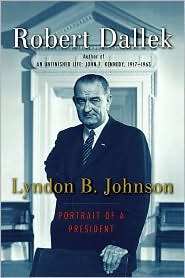
    Now, we’re not sure how the confusion arose or who is spinning who. But we wonder if Mr. Obama learned a few presidential wiles from Lyndon Johnson and Medicare. LBJ managed to push through legislation creating the Medicare program in July 1965, despite vociferous opposition from the American Medical Association. He knew the program would never get off the ground without physician support. Here’s how he got it, as recounted by historian Robert Dallek in Lyndon B. Johnson, Portrait of a President:

    Some members of the Administration were so worried about winning the cooperation of the AMA that they urged a meeting at the White House with AMA leaders at which the President appealed to doctors to support a law favored by the people and worked out “in the most pain-staking way in accordance with the exacting rules of our democracy.”

    Johnson did not think that the AMA and most physicians would find it easy to oppose Medicare without serious damage to their public standing. But he was worried enough to invite AMA leaders to the White House, where he could compel a public acknowledgement of their support. In a July 30 discussion with eleven AMA officers, Johnson asked the physicians for help in getting doctors to rotate in and out of Vietnam for a few months to serve the civilian population. Appealing to their patriotism, Johnson declared, “Your country needs your help. Your President needs your help.” The doctors responded almost in unison with promises to start a program immediately.

    “Get the press in here,” Johnson told [presidential Press Secretary Bill] Moyers. When they arrived, Johnson described and praised the AMA’s readiness to help the Vietnamese. But the reporters, undoubtedly primed by Moyers, wanted to know whether the doctors would support Medicare. Johnson, with mock indignation, said: “These men are going to get doctors to go to Vietnam, where they might be killed. Medicare is the law of the land. Of course they’ll support the law of the land. Tell them," Johnson said, turning to the head of the delegation. “Of course, we will,” the AMA president responded….A few weeks later, the AMA announced its intention to support Medicare.

    We just hope Obama doesn’t have any appendectomy scars to show us.

    - Denise Peterson & Cathy Kelly

    Thursday, March 12, 2009

    Health Care Reform and Pharma: Keep Industry "Healthy Enough"

    Last night, former President Bill Clinton was interviewed on CNN about health care reform. Health policy junkies should check out the whole thing. After all, we're the only ones who think "failed health care plan" as the main legacy of the Clinton era. (Watch the CNN video here; read the transcript here.)

    For biopharma, companies, though, the interview underscores the sense that much has changed since 1993--when "pharmaceutical profiteers" were the all-purpose villain in the health care debate--and 2009, when Big Pharma quite literally has a seat at the table on reform. (Two, actually).

    But it is also a reminder that this ain't the Bush years.

    The interview was a reunion of sorts, with CNN's Sanjay Gupta posing the questions. Gupta began by noting his own background as an advisor to the health care reform task force, and adding that he withdrew his name as a candidate to be surgeon general under Obama. When Gupta asked about "drug costs" and how to bring them down, we sat forward in our seats.

    Here is what Clinton said in response...


    "There is a very simple answer to this, which is that we have made a bargain with our pharmaceutical companies. We've said to them for decades now, 'We love having you in America. We're proud of you. We know you have to spend a lot of money on research and then you market the drugs and all. So we will eat our research and development costs in American prices so that you can sell exactly the same drugs you sell to us for less money in Canada and Europe.

    "For example, our AIDS clinic down the street here in Harlem, the taxpayers pay $10,000 a year to treat people with the big pharmaceutical companies' AIDS medicine. That medicine costs about $3,500 a year in Canada and Europe, countries with per capita incomes as high as America. Keep in mind, Europe has a lot of very successful drug companies and they don't do this.

    "We need an honest, open, clear dialogue admitting that we're proud of these companies. They've got tens of thousands of employees. They've done a good job for America. They've saved countless lives. But we just can't go on subsidizing [more than] our other competitors can.

    "So how can we reach a different arrangement so that we keep the drug companies healthy enough and we keep them developing new medicine?

    "The system we've got is not working very well. They don't have a lot of new medicines in the pipeline, partly because so many new advances, particularly with the sequencing of the human genome, have led to patents on smaller and smaller and smaller components of what ultimately becomes a blockbuster drug. So a lot of new drugs are not coming because we haven't reexamined how the patent process and the research process are working together, or not working.

    "Meanwhile, we keep eating all these costs, and countries just as wealthy as we are are getting the same drugs made by the same people for less money, which is why there was so much [discussion of] allowing re-importation from Canada.

    "What I recommend is, let's don't pretend these drug companies are bad people. They've done a lot of good for us. But let's be honest that America is no longer so dominant over Canada and Europe and Japan that we can afford the whole subsidy.

    "One good place to start is what President Obama has proposed, letting the federal government do what I do for AIDS drugs, letting them bargain for lower prices for well-established medicines bought in bulk for the benefit of our seniors. That's a good place to start. And we just need to work out a new deal with them so they can do well.

    "But, you know, for most of the 1990s and the early part of this decade, they earned 18 percent, which is a huge return. You know, Wal- Mart is, what, 5 or 6 percent. And it is fascinating to see that at the same time, because of a lot of these factors relating to patenting and scientific advances, the number of new drugs in the pipeline seems to be slowing down.

    "So we need to examine both how we can both get the benefits of genomic advances and how we can lower the cost to the consumers."


    Friday, March 6, 2009

    Health Reform Summit: BIO's Invitiation Lost in the Mail

    We've written plenty about the parallels and contrasts between health care reform vintage 2009 and the last big go 'round in 1993 with ClintonCare.

    Today's health care reform summit definitely fits in the "contrast" category. And not just because it was broadcast live on the web, in self-conscious contrast to the Clinton task force's closed door policy.

    What caught our eye was the attendee list. The brand name pharmaceutical industry quite literally had a seat at the table--two in fact: Pharmaceutical Research & Manufacturers of America CEO Billy Tauzin and Pfizer CEO Jeff Kindler were among the 150 or so to score what President Obama called "the hottest ticket in town."

    Then there is who wasn't invited. No one from the generic industry--and no one from the Biotechnology Industry Organization.

    That is a huge contrast to 1993, when BIO (or at least, its predecessor organizations) offered the brand industry its only access to the Democratic leadership. Because, back then at least, everybody hated Big Pharma, but they just loved those spunky, innovative biotech companies.

    The fact is that it has been tough going for BIO so far in 2009. The association has some ideas to help its members in the context of the stimulus plan. They were probably long-shots, sure, but nothing materialized.

    And then the President put follow-on biologics in the budget proposal. Not really a surprise, but there was a lot of tough talk about "evergreening" that probably made some folks nervous.

    Now, the kick off to the health care reform debate. And BIO literally didn't have a seat at the table...

    Thursday, February 26, 2009

    Obama's "Down Payment" On Health Care Reform: How Far Down?

    Advocates for an aggressive, first-100-days push for universal coverage in the Obama Administration can't have enjoyed much of what they heard in the Presidential Address to Congress February 24.

    For the biopharma industry--whose trade associations are among the stakeholder groups publicly urging action on health care--it is hard to gauge how disappointing that outcome will be, though the President's budget proposal (due out Thursday) could make that picture clearer.

    There are at least three reasons advocates for universal coverage may be disappointed by the Presidential address.

    First, it is clear that while health care reform is a priority for the Administration, it is not the priority. To no one's surprise, Obama focused initially on the response to the economic crisis, including the recently enacted stimulus legislation and the next installment of relief for the financial system. But when he turned to the next item on the agenda, he didn't single out health care, instead listing energy, health care and education as equal priorities.

    Indeed, among the three key areas for investment cited by Obama--"energy, health care, and education"--health care was always listed second, and was also the second theme discussed at length in the speech. (As graduates of the IN VIVO Blog School of Rhetoric know, being second on a list of three is worse than being last: debaters are trained to use their strongest argument first, the second best last, and leave the weakest in the middle in hopes that no one listens too carefully.)

    Second, Obama stopped well short of making universal coverage the goal of health care reform in the near term, describing his upcoming budget proposal as offering "a down-payment on the principle that we must have quality, affordable health care for every American."

    Leaving aside the odd metaphor in a speech shaped so fundamentally by the collapse of the mortgage market, "down-payment" sure sounds like a synonym for "incremental." Indeed, Obama himself described the expansion of the Children's Health Insurance Program already signed into law as a "down payment."

    Third, the discussion of health care reform was framed clearly in the context of addressing the long-term economic health of the country rather than as a response to the short-term economic crisis. Translation: reform proposals will be judged on their ability to reduce spending and shrink deficits--there will be no stimulus-style spending to expand coverage with promises to restore balance in the future.

    All in all, Pharmaceutical Research & Manufacturers of America CEO Billy Tauzin and Biotechnology Industry Organization CEO Jim Greenwood did a pretty good job of predicting how the address would go. (See our post here.)

    In particular, the address lends credence to Tauzin's suggestion that the departure of Tom Daschle from his expected position as the Obama Administration's health care general means incremental change driven by the the economic team rather than comprehensive, policy-first reform.

    Therein lies the danger for the biopharma industry: in the context of budgetary priorities, measures to restrain pharmaceutical prices are tempting offsets with little political downside compared to say, slashing physician payments or forcing hospitals to close. We've already noted some rhetorical parallels between Obama's first remarks to Congress on health care and President Clinton's in 1993.

    That reform was supposed to be budget neutral, to avoid undoing Clinton's first legislative victory, a tough fought balanced budget (remember those days?). With that mandate, Clinton's working groups quickly moved into aggressive proposals for restraining spending, especially on drugs and biologics before the whole initiative collapsed in the face of opposition from across the spectrum of health care sectors.

    In 2009, there is no doubt that the budget comes first, quite literally. Obama's next "down payment" on health care reform will be unveiled Thursday; a bipartisan summit on health care reform kicks off on Monday. Just don't call it the Health Care Reform Task Force ...

    Wednesday, February 25, 2009

    Von Eschenbach Maps Out Role In Health Reform

    “I’m not going to go fishing and play golf.”

    That is how former FDA commissioner Andrew von Eschenbach describes his post-government plans after leaving the Food & Drug Administration: a consulting gig at Greenleaf Health LLC, a return to MD Anderson and any “other opportunities,” should they present themselves. Von Eschenbach left FDA in January when President Barack Obama took office and has kept mum about his future plans.

    Until now. On the policy side, von Eschenbach is teaming up with an old FDA colleague—his former chief of staff Patrick Ronan. Von Eschenbach will be a senior adviser at Greenleaf Health, a regulatory consulting firm that Ronan founded upon leaving FDA in 2006. Ronan was von Eschenbach’s chief of staff for his first year on the job, and the two have kept in touch after Ronan left the agency, von Eschenbach said.

    Greenleaf’s clients include medical device companies, pharmaceutical manufacturers and public relations firms, but Ronan says Greenleaf’s sweet spot is with smaller biotechs without a Washington presence that need regulatory guidance. Ronan and von Eschenbach are the two principle advisors; Greenleaf also has a chief marketing officer.

    Of course, as a former government official, von Eschenbach is restricted in the work he can do as an industry consultant. For the next year, for example, he cannot advocate directly to FDA on behalf of a third party. And he has a lifetime ban on lobbying the agency on the rules and regulations upon which he worked on or influenced while he was commissioner.

    But in speaking to von Eschenbach, that doesn’t sound like the type of work he’s interested in anyway. In a phone interview, von Eschenbach talked broadly about “contributing to a more strategic discussion of the future of health care” and helping to find “integrated solutions” for diseases like cancer and Alzheimer’s—all in the context of the greater health reform debate.

    As he was at FDA, von Eschenbach is interested in issues like personalized medicine, genomics and informatics, and ways in which the system can prepare for a more patient-centric health care environment. Greenleaf, he says, is a great “launching pad” by which to contribute to those kinds of macro health care issues, and participate in a “greater conversation on a global perspective.”

    Von Eschenbach is also “deeply interested” in directly contributing to health reform efforts—one of President Obama's priority issues for his first term. Von Eschenbach says he is open to talking to policymakers (without directly lobbying anyone) about changes that are needed to support the types of products—like personalized medicine and drug-diagnostic combinations—that he believes will be the future of health care. (Von Eshenbach offered thoughts on that topic during a recent health policy conference sponsored by The Atlantic. You can read more in an upcoming issue of The RPM Report.)

    If that weren't enough, he's also returning to academia. As we predicted in an earlier blog post, Von Eschenbach is returning to University of Texas MD Anderson Cancer Center in Houston, where he spent 25 years of his career in various leadership positions before being named director of the National Cancer Institute in 2000.

    Upon his return to MD Anderson—which is still in the works—he will be an adjunct professor and will serve on the advisory board of the David Koch Center for Applied Research in Genitourinary Cancers. His first board meeting is April 3.

    Back to the Future on Health Care Reform

    “All of our efforts to strengthen the economy will fail unless we take bold steps to reform our health care system.”

    With those words uttered during his first address to Congress last night, President Obama officially kicked off the health care reform debate in 2009. Oh wait a second—those words were from Bill Clinton in February 1993.

    What Obama said was “the cost of our health care has weighed down our economy and the conscience of our nation long enough. So let there be no doubt: health care reform cannot wait, it must not wait, and it will not wait another year.” In our next post, we'll offer our key takeaways from Obama's address.

    But first, we just had to note an irony. The one thing everyone in Washington says about health care reform 2009 is that the Democrats have learned lessons from 1993. And yet there sure seemed to be a lot of similarities between Clinton's first address to Congress and Obama's when it came to the arguments for health care reform.

    Here are a few of the parallels, courtesy of transcripts provided by the Washington Post for Clinton’s addresses, and the official White House text of Obama’s remarks.
    Clinton (1993): “America's businesses will never be strong; America's families will never be secure; and America's government will never be solvent until we tackle our health care crisis.”

    Obama (2009): “The crushing cost of health care..now causes a bankruptcy in America every thirty seconds. By the end of the year, it could cause 1.5 million Americans to lose their homes. In the last eight years, premiums have grown four times faster than wages. And in each of these years, one million more Americans have lost their health insurance. It is one of the major reasons why small businesses close their doors and corporations ship jobs overseas. And it’s one of the largest and fastest-growing parts of our budget.”

    Clinton: “Later this spring, I will deliver to Congress a comprehensive plan for health care reform that will finally get costs under control.”

    Obama: “In the next few days, I will submit a budget to Congress…[that] includes an historic commitment to comprehensive health care reform – a down-payment on the principle that we must have quality, affordable health care for every American.”

    Clinton: “There will be no new cuts in benefits from Medicare for beneficiaries. There will be cuts in payments to providers: doctors, hospitals, and labs, as a way of controlling health care costs. These cuts are only a stop-gap until we reform the whole health care system.”

    Obama: “Comprehensive health care reform is the best way to strengthen Medicare for years to come.”

    Clinton: “We will root out fraud and outrageous charges, and make sure that paperwork no longer chokes you or your doctor.”

    Obama: “We will root out the waste, fraud, and abuse in our Medicare program that doesn’t make our seniors any healthier.”
    Of course, we all know what happened next: Clinton’s vaunted health care reform task force set to work, and the debate devolved into partisan differences and collapsed under its own weight. Obama surely won’t repeat that mistake.

    Or will he? “Now, there will be many different opinions and ideas about how to achieve reform, and that is why I’m bringing together businesses and workers, doctors and health care providers, Democrats and Republicans to begin work on this issue next week” (Obama, 2009).

    The IN VIVO Blog Podcast: Comparative Effectiveness, HHS Candidates, and Health Reform


    Welcome to the first IN VIVO Blog podcast. We know ... it took us a while, but we finally got there. There will be many different kinds of podcasts from various reporters and editors of the IN VIVO Blog, which includes writers of The RPM Report, IN VIVO, The Pink Sheet, Start-Up and other publications.

    Our first podcast comes to you from the editors of The RPM Report. It's called "3 things in 3 minutes." What is it? It's just that: 3 topics that we try and discuss in 3 minutes (we went a little over).

    The topics for this discussion? Comparative effectiveness, the next HHS Secretary, and whether Medicare Part D should be a model for health care reform. If you listen closely, you may even be rewarded with a "bonus topic."


    So tell us what you think. We'd love to hear your thoughts. Just be gentle.

    Tuesday, February 24, 2009

    How Much Reform, How Fast? What to Listen For Tonight

    Do we have to pay for health care reform?

    That is probably the single, critical question all stakeholders in the health care system will be listening for when President Obama addresses a joint session of Congress Tuesday night.

    No one expects Obama to back down from his campaign promises to push for universal coverage in his first term. Indeed, Office of Management & Budget Director Peter Orszag affirmed that health care reform will be “the next priority up for the Obama administration” during a closed door meeting with the National Governors’ Association, Michigan Democrat Jennifer Granholm said Feb. 22.

    However, the economic crisis and the withdrawal of Tom Daschle from his expected role as health care reform general raise significant questions about the direction of and prospects for reform in the near term.

    In the context of the presidential address and upcoming budget proposal, those questions essentially focus on how reform will be framed.

    For the biopharma industry, the hope is that Obama will define health care reform as, in essence, a continuation of economic stimulus, pressing the urgency of change without insisting on offsetting cuts to pay for expanded coverage.

    Pharmaceutical Research & Manufacturers of America CEO Billy Tauzin suggested that policymakers should learn a lesson for Japan’s economic struggles in the 1990s. That experience, he said during a webcast sponsored by Ernst & Young on Feb. 20, shows what happens when “stimulating the economy helps turn things around and then fiscal restraint comes in too soon and then blocks the good effect of the stimulus.”

    “The budget is going to be facing some very ugly deficit numbers,” Tauzin noted. However, he predicted, “the trend is going to be let the stimulus work before we start to focus on these ugly deficits.”

    Nevertheless, all indications are that the President instead will call for a specific sum of money to be reserved for health care reform—and pledge to find offsets to pay for it upon enactment.

    That may not sound like a significant difference since, after all, health care reform will have to be paid for one way or the other. For biopharma companies, however, the difference could be quite significant: many of the most obvious targets for savings involve cuts to drug pricing or other measures to control spending on pharmaceuticals.

    It is almost impossible, for example, to imagine a package of health care spending cuts that does not address the prices of drugs under the Medicare Part D prescription drug program. Or that excludes a follow-on biologics provision, which would presumably be scored as reducing federal spending by billions of dollars.

    Both measures may be inevitable anyway, but enactment in the context of finding a fixed savings target to pay for broad expansion of health coverage means a much higher chance that cuts to Part D pricing will be deeper, and that exclusivity to innovators under FOB legislation may be shorter, than would otherwise emerge from the legislative process.

    The framing of health care reform is just one of many topics industry will be eagerly listening for in Obama’s “unofficial” state-of the-union address. Here are some key themes:

    Bragging Rights: “I think the first thing he will do is talk about what he has already done,” BIO CEO Jim Greenwood said during the Ernst & Young webinar, highlighting expansion of the Children’s Health Insurance Program and several elements of the stimulus bill, including funding for health care IT, comparative effectiveness research, and new spending for the National Institutes of Health.

    “I think he starts off with bragging rights and then promises in more general terms that there is much more to be done,” Greenwood said.

    Still, even a recap of the first month could contain important indications of policy directions, especially when it comes to the comparative research funding included in the stimulus. That relatively small ($1.1 billion) line item generated a lot of political attention, and it will be interesting to see whether Obama devotes time to it.

    Universal Coverage: Obama “is very interested in moving aggressively to expand insurance coverage,” Tauzin noted. But how prominent and how persuasive will discussion of that issue be? Tauzin clearly doesn’t expect much, predicting on the Ernst & Young call that reform will move “piecemeal” rather than in a comprehensive fashion in the months ahead.

    Fiscal Responsibility: The President hosted a “fiscal responsibility” summit Feb. 23 and plans to release a 2010 Budget outline on Feb. 26. During his weekly web address Feb. 21, Obama pledged to “release a budget that's sober in its assessments, honest in its accounting, and lays out in detail my strategy for investing in what we need, cutting what we don't, and restoring fiscal discipline.” That sounds like a recipe for pay-as-you-go health reform.

    Wellness/Prevention: Many politicians now display “an emphasis on prevention and dealing with chronic diseases in the early stages instead of literally waiting to treat all the damage done,” Tauzin noted. “You see that theme expressed in the politics everywhere and I expect you will see it expressed somewhere” in the Presidential address.

    FDA: A month ago, the peanut butter recall made FDA the subject of discussion during White House press briefings and a pledge to name a new commissioner shortly. Daschle’s departure delayed that plan. Obviously any reference to FDA will be important for industry to analyze—all the more so if it suggests an emphasis on the food side of the agency’s mission (and hence a tilt towards an expert in that field to run the agency) and/or a commitment to zealous enforcement by regulators.

    Tobacco regulation: All indications are that the White House and Congress are committed to expanding FDA’s mission to include regulation of tobacco products (a theme that ties together both prevention and FDA regulation). A discussion of tobacco could signal a further layer of distraction for the agency from the product review issues central to industry—but perhaps also an enforcement agenda that spares biopharma firms from the toughest scrutiny.

    Stem cell research: Overturning the Bush Administration policy on stem cell research is an important priority for BIO, but also one that may have been delayed by the wait for an HHS nominee. Biotech companies would welcome a public commitment to reverse that policy.

    Personalized medicine: Obama sponsored legislation in the Senate to create regulatory systems and incentives for personalized medicine. Any discussion of science and medicine from the podium could be a call to move forward in that area.

    Generic drugs: Former President Bush often highlighted the cost saving impact of generics. Will Obama do the same?

    Medicare managed care: The private sector has a big role in Medicare, both via fully integrated Medicare Advantage plans and as the providers of the Part D prescription drug insurance. The biopharma industry would love to see Part D serve as the template for broader health reform—but it is so closely tied to the Bush Administration that it may be difficult for Obama to embrace the program. Tonight is the first chance.